Conversation Summary – 9/24: Barrett Ch. 2-3, 5
We began class with our usual mood checks. Subsequently, we spent quite a long time discussing our blogs: what topics we planned to do, our feelings about the criteria, etc.
Jenna and Lorraine then led our discussion about Lisa Barrett’s book, How Emotions Are Made, specially looking at chapters 2, 3, and 5.
For Chapter 2, which focuses on how emotions are constructed, Jenna and Lorraine first delved into the concept of experiential blindness. To show how our brain creates concepts to sort out our experiences, Barrett uses an image of a blob that actually is the silhouette of a bee. Without knowing that it’s a bee, the image seems undecipherable. However, once the brain is looking for a bee in the “blob,” the image can be discerned. Emotions are the same way; once we know what to look for in an experience, we can clearly discern what we’re feeling. We use concepts to create familiarity and compartmentalize situations.
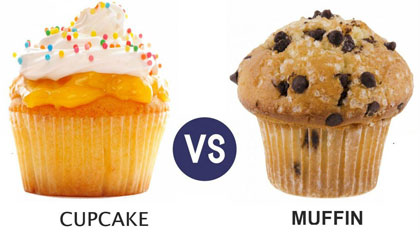
Lorraine spoke specifically to how many emotions would be indistinguishable if they didn’t have social identifiers. To clarify this thought, she invoked Barrett’s example of muffins and cupcakes. Aside from a slight difference of having icing or not, the two are basically the same. And yet, there’s a tacit social understanding that the two concepts are different and appropriate for varied situations.
Jenna then directed us to page 104, where Barrett asserts that emotional knowledge indeed comes from constructions that are passed down by other humans. We use “emotion words” to create meanings (emotional knowledge) for the physical signals we feel and interpret. However, Jenna was careful to make us consider Barrett’s warning that predicting our future emotions does not have a consistent cause/effect story. Many of our feelings are unable to be traced.
To conclude the class, we transitioned into a mini lecture from Dr. Gallegos about the different constructions that are involved in the construction of emotion. I’ve provided these definitions below:
Social construction: social roles, standards, or concepts of how things should be (affect our reactions)
Psychological construction: interpret experiences and sensory input, and depend on brain’s interpretation
Neurological construction: physical brain processes can be rewired over time for emotions
Shared by: K. Adams
Image Credit: https://www.americangr.com/difference-between-muffin-and-cupcake/