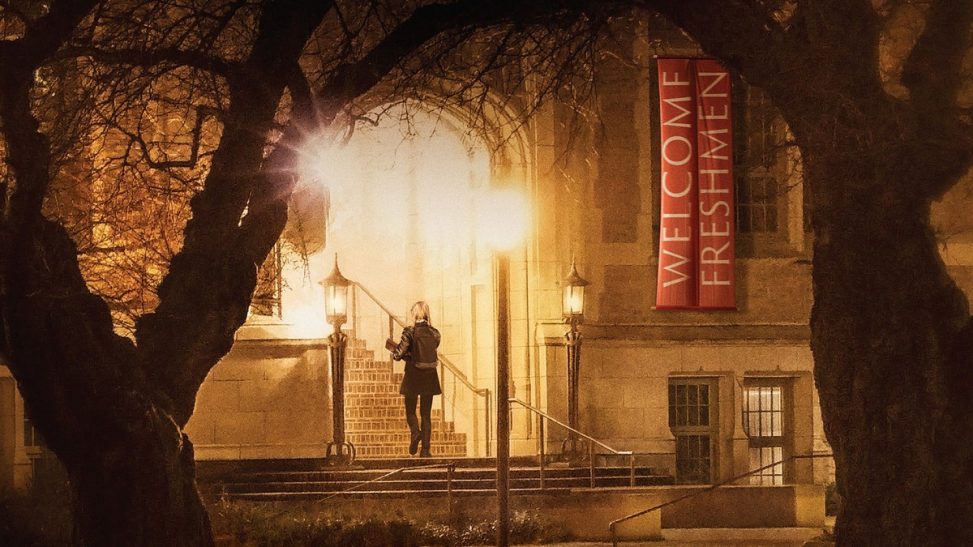
****SEXUAL ASSAULT TRIGGER WARNING****
Introduction
On one of her first nights in college at UNC Chapel Hill, Annie Clark decides to go to a fraternity party. She is sexually assaulted before classes have even started. When she goes to her school administrator to report, she explains that she was “violently raped.” The administrator’s response to this is: “Rape is like a football game, Annie. If you look back on the game, what would you have done differently in that situation?” Other girls recall their reporting experiences: “What were you wearing?” “Did you drink?” “How much did you drink?” “Did you say anything to him?” “Did you possibly send him the wrong message?” “You don’t know what he’s going through right now.” “There is not enough evidence to prove that you were sexually assaulted against your will.”
In this blog, I will provide two examples of countless college sexual assault cases in which the victim is blamed and punished for speaking out about the assault. In these cases, either convincing evidence or admission of the encounter was provided, yet the victim was either not taken seriously or punished more so than praised for speaking out for justice. Therefore, in this blog I will attempt to understand why, even when we are given solid evidence of a sexual assault, do we have a tendency to blame the victim? To answer this question, I will refer to Kate Manne’s philosophy of Misogyny and Himpathy as she outlines in her book Down Girl, to exhibit how colleges today not only perpetuate Himpathy, but use it as a tool to protect their own reputations at the expense of their students’, ultimately, to protect the steady rate of their economic growth. First, I will demonstrate Misogyny and Himpathy as they function together in our society. Then, I will use college rape cases to build off of Manne’s definitions and come to my conclusion that, at the end of the day, the way colleges handle cases of sexual assault plays a key role in leading us, as a society, to collecctively blame victims who speak out for justice.
Misogyny and Sexism
Misogyny is frequently defined as “dislike of, contempt for, or ingrained prejudice against women.” In her book Down Girl, however, Kate Manne argues that this definition is lacking because Misogyny keys into a larger patriarchal system at play. According to Manne, Misogyny is “the ‘law enforcement’ branch of a patriarchal order, which has the overall function of policing and enforcing its governing ideology” (63). Furthermore, she says “sexism is the branch of patriarchal ideology that justifies and rationalizes a patriarchal social order, and misogyny is the system that polices and enforces its governing norms and expectations. So sexism is scientific; misogyny is moralistic. And patriarchal order has a hegemonic quality.” Therefore, Misogyny and Sexism work together to uphold the patriarchy embedded within our society.
To give an example of Misogyny and Sexism working together, I will refer to occurrences at Tesla in 2017. After working at Tesla since 2013, a woman named AJ Vandermeyden was fired in retaliation for speaking out against sexual harassment within the company.
See:https://www.theguardian.com/technology/2017/feb/28/tesla-female-engineer-lawsuit-harassment-discrimination.
Vandermeyden was an engineer for Tesla and worked with a majority of men in the company. In an article for The Guardian, Vandermeyden explains the sexism she experienced with Tesla, including several encounters of cat calls and “whistling.” More drastically, however, Vandermeyden describes the lack of female promotion that exists within Tesla: men were promoted over women, even though the women were equally or more qualified than the men in most cases. “Sexist Ideology,” says Manne, “will tend to discriminate between men and women, typically by alleging sex differences beyond what is known or could be known, and sometimes encounter to our best scientific evidence.” We see this Sexism that Manne describes at play here with Vandermeyden’s experience at Tesla because she (and other women) were more qualified than most male applicants, yet their sex determined their status as un-promotable to positions of leadership.
But then, according to Manne, Misogyny steps in as the “policer and enforcer,” punishing the women who step out of the sexist role they have been confined to. For example, after Vandermeyden went public with her case against Tesla in February 2017, the new female Chief People Officer to oversee HR, Gaby Toledano, asked to meet with Vandermeyden alone on Memorial Day “for coffee” without any lawyers present. At this meeting, Toledano told Vandermeyden that she “could resign and receive a severance package or she would be terminated immediately and should not show up for work the next day” (The Guardian). “I’m the one who spoke up, and they’re saying, ‘One way or another, you have to leave,’” said Vandermeyden. “Misogyny,” says Manne, “will typically differentiate between good women and bad ones, and punishes the latter.” In this situation, we see that Vandermeyden was singled out for having “spoken out” about the sexism she experienced at Tesla, and Misogynistic practices worked in conjunction with that Sexism to punish her for stepping out of line.
“Overall,” says Manne, “Sexism and Misogyny share a common purpose: to maintain or restore a patriarchal social order. But Sexism purports to merely being reasonable; misogyny gets nasty and tries to force the issue.” For Vandermeyden, it was “reasonable” to assume that a man who was equally qualified as she was promoted rather than a woman, yet slightly more questionable when that always became the case… but still, “reasonable.” But then, who did she think she was to “speak out” about this questionable “reasonableness” publicly? She must be “punished” and fired for her stepping out of line. Manne says, “Sexism is hence to bad science as Misogyny is to moralism. Sexism wears a lab coat; Misogyny goes on witch hunts.” Vandermeyden was hunted all the way out of Tesla’s engineering floor… for good. As a result, Tesla continues to secure leadership positions as a male domain, thus upholding the patriarchy with sexism and misogyny ( as seen in Vandermeyden’s case).
But why, in the first place, do men have “claims” on domains such as sports, business, and politics when women do not? This is due to a system of “goods” we have in our society that Manne likes to call “masculine-coded goods” and “feminine-coded goods.” According to Manne, men and women belonging to these cis-gendered groups must provide their masculine or feminine coded goods to function within society. Masculine-coded goods for men are that they are the “providers” who work in fields such as sports, leadership, politics, and business. For women, on the other hand, feminine-coded goods come in the form of “performing certain forms of emotional, social, domestic, and sexual labor,” but women must also do so “in a loving and caring manner and enthusiastic spirit.” As a result of providing these goods, women adhere to the social roles of the “loving wives,” “devoted moms,” “cool girlfriends,” “loyal secretaries,” and “good waitresses.” They serve as the submissive “lovers” and “carers” for the family and the hard-working men.
Here is where Manne’s “policing” and “enforcing” of misogyny comes in. Sexism, Manne says, “involves believing in men’s superiority to women in masculine-coded, high-prestige domains,” whereas misogyny “involves anxieties, fears, and desires to maintain a patriarchal order, and a commitment to restoring it when it is disrupted.” This “commitment” Manne describes manifests itself in the punishment and backlash women experience when they step out of these roles, do not perform these roles with “caring manner and enthusiastic spirit” or, God forbid, threaten to take masculine-coded goods away from a man. I will give a few examples, and then demonstrate how Manne’s misogyny functions in campus rape culture across the U.S. through a phenomenon she likes to call Himpathy.
She Does Not Perform, or She Does Not Perform Enthusiastically
In a Netflix Comedy Special entitled Baby Cobra, a comedian named Ali Wong explains that pregnant comedians do not usually get pregnant, or if they do they drop out of the profession soon after (Wong was pregnant at the time this statement was made). She challenges the audience to think of another pregnant and working comedian other than herself: news flash! You cannot think of one. More importantly, however, Wong tells the story of people’s reactions to her working after having recently given birth to her first child. In a comparison she draws between men and women, Wong says “a week after men have a baby they get up on stage and say ‘guys, I just had this f**king baby, that baby’s a little piece of sh*t, it’s so annoying and boring,’ and all of these other sh*tty dads in the audience say ‘that’s hilarious, I identify,’ and their fame just swells because they become this relatable family man all of a sudden.” Simultaneously, the wife is at home taking care of the child and recovering from childbirth.
In contrast, Wong offers her own less fame-provoking (and more judgment inducing) experiences with working months after giving birth to her first child, simply as a woman and not a man. When a woman feels well enough to work months after having given birth, she says “people say [to me] ‘when you’re here, then who’s taking care of the baby? [She responds] Who the f*ck do you think is taking care of the baby?’” Wong experiences negative “backlash” from the public for failing to “perform” the feminine-coded role of the “devoted mother” neither as much or as enthusiastically as is required by the patriarchal system. Additionally, the praise men get in the same situation further demonstrates that the workforce is a more appropriate domain for men than women, since we see that Wong’s husband is not punished but, instead, appreciated for having conceived a child and returned to work.
It is when women threaten to “take away” masculine-coded goods from a man, however, that they truly become villainized and punished by the patriarchal society. I aim to demonstrate this horrid treatment of women (as Manne describes in Down Girl) in following examples of rape on college campuses.
The Message is Clear: Don’t Pursue Collegiate Justice
Kamilah Willingham was a student at Harvard Law School when one of her close friends molested both her and another one of her female friends after they had been intoxicated to the point of unconsciousness. The assaulter, name undisclosed, had been a “good friend” of Kamilah’s since the beginning of her time at Harvard Law School, so she did not feel that she needed to think twice about drinking more than what would enable her to remain fully physically functioning around him. The following morning, he admitted, via text, that he did molest Kamilah and her friend. Kamilah decided to press charges and her mother “assumed Harvard would do right” by her daughter. While the race and/or ethnicity of her assaulter is not disclosed, I find it important (for the purposes of Manne’s philosophical argument) to mention that Kamilah is Black.
After telling the dean of students about her experiences, the dean told Kamilah “I just want to be sure that you don’t talk to anyone about this. It could be bad for everyone if people started rallying around having him removed from campus.” Kamilah’s initial thoughts were: “He’s a predator! He’s dangerous, and that’s exactly what I want.” In her legal hearing, Professors who knew both Kamilah and her assaulter asked her the following questions:
Professor: Did you give him the wrong message with your friendship to the point where he could have misunderstood your friendship?
Kamilah: No, because sex was never a part of that friendship. And if it were ever going to be introduced, when I was awake would be a good time for that.
Professor: Why didn’t you fight him?
Kamilah: He’s 6’3”, over 200 lbs. I was unconscious or just coming to and I could barely take control of my own body. There was this extreme reluctance to believe me.
After the hearing, Kamilah’s assaulter had been expelled and it had been found that he had assaulted her. However, the following September, Kamilah returned to Cambridge and received a Facebook message from the Dean of Students saying that Kamilah’s assaulter could appeal the decision. The board of Harvard Law professors had voted again on whether to uphold the decision and remove him, and they decided to overturn it and let him back in. Harvard Law School undertook the appeal without notifying Kamilah or including her in the process, which was a direct violation of federal policies.
Contextual Statistics
Harvard University has had 135 reported sexual assaults and 10 reported expulsions between 2009 and 2013. UC Berkeley has had 78 reported sexual assaults, and 3 reported expulsions between 2008 and 2013. Dartmouth has had 155 reported sexual assaults and 3 reported expulsions between 2002 and 2013. Stanford University has had 259 reported sexual assaults and only 1 reported expulsion between 1996 and 2013. UNC has had 136 reported sexual assaults, and 0 expulsions between 2001 and 2013. UVA has had 205 reported sexual assaults and o expulsions between 1998 and 2013, but 183 expulsions for CHEATING AND OTHER HONOR BOARD VIOLATIONS. These reports, in large part, involve information about the name of the student who assaulted the reporting victim. While these statistics demonstrate horrid numbers of reported sexual assaults, it is important to note that these university administrators often see multiple reported sexual assaults by the same assaulter, yet still fail to bring the assaulter into a university conduct hearing.
Himpathy
So, my question is, when provided with such evidence, how could Kamilah’s case be taken so lightly? How could professors at one of the top law schools in the world question Kamilah and whether she misread the situation that was so clearly a violation? And why, looking at these statistics, are colleges to reluctant to pursue any legal action when they know that there are individuals on their campuses not respecting others? In this section, I will use Manne’s philosophy, called “Himpathy,” to resolve this puzzle and the first two questions stated in this paragraph. Then, we will move on to an additional case to answer the third.
According to Manne, we web exonerating narratives for men in our patriarchal society: they “reflect and perpetuate a strenuous collective effort–namely, trying to uphold certain men’s innocence, to defend their honor, and to grant them a pardon prematurely, or without the proper authority to do so” (178). Manne calls these exonerating narratives the “Honorable Brutus Problem” where “the good guy can do no wrong; so we don’t hear a bad word against him” (180) even if one has been told to us. Why? Because “we move from the premise of ‘he’s an honorable man’ or a ‘good guy’ to the conclusion that she must be lying or hysterical, instead of responding properly to the stronger evidence that she’s the one telling the truth” (180). How, exactly, we get from point A to point B is where Manne’s philosophy steps in.
Manne explains that, with rape allegations, we have reasons for denialism–reasons to believe that the victim’s narrative (with strong evidence) simply is not true. This is because we a) have a mistaken idea about what rapists are like “as monsters,” b) we view rapists as “psychopaths, pictured as ruthless, unfeeling, and sadistic” and c) we have a subtle form of wishful thinking that “sexual violence on college campuses occurs primarily due to youthful inexperience and ignorance, to the exclusion of misogynist aggression, serial sexual predation, and norms that enable and protect the perpetrators: that is, rape culture” (199-200).
We take these views of the “rapist” and then attempt to view the accused as that person. Right there, we are set up to fail. Why? Because the accused are, as Manne likes to call them, usually white and/or privileged “Golden Boys”: men with a bright future, social acceptance and appreciation, and others hopes invested in his life and future as well. The Golden Boy is, essentially, “the man.” He plays a social role in making social life more enjoyable–and his absence is known. Everyone feels good around him, and he is sometimes “hard to pin down” as a fellow student at Wake Forest University mentioned in a class discussion.
This subconscious thought process works in the form of modus ponens. We think: A golden boy is not a rapist. X is a golden boy. Therefore, X is not a rapist. A school administrator in “The Hunting Ground” said, “In college, it isn’t the guy jumping out of the bushes who is going to be your rapist. It’s your friend. The person you are closest to.” It is, therefore, hard to keep that in mind when your friend is the Golden Boy and he has been accused of raping another one of your friends.
As a result of our inability to see these Golden Boys as rapists, Manne explains that the situation is flipped: We start feeling bad for HIM and uncomfortable around/angry with HER, despite the evidence we may be given. We think, “poor boy,” he has such a bright future and now some woman wants to come in here and take that away? Suddenly, he becomes the victim of his own crime. His future is, suddenly, very much at the expense of the woman. Therefore, Manne’s “HIMPATHY is: This excessive sympathy sometimes shown towards male perpetrators of sexual violence, and it is usually extended to men belonging to the following groups–white, non-disabled, and otherwise privileged Golden Boys” (197).
In her book, Manne uses Brock Turner (the sexual assaulter in the Stanford Rape Case) as her example of the Himpathy-receiving Golden Boy: he was the recipient of a Stanford swimming scholarship. Turner was found raping an unconscious woman (Chanel Miller) behind a dumpster when two men found them. Her DNA was later confirmed to have been on his hands. Despite this evidence, Turner received sympathy and pity from his family and friends. His father said that he should not be sent to prison for “20 minutes of action,” while his female childhood friend, Leslie Rasmussen, sent a letter to the Judge on his behalf. “In it, she includes a photo of Turner smiling and says there’s no way Brock could ever be a rapist because ‘he was always the sweetest to everyone,’ going to far as to call the whole thing ‘a huge misunderstanding… he used to be a ‘swim star’ and now he is the face of rape on college campuses’” (Paiella, The Cut).
The problem with Himpathy, as Manne describes and as we see in this example, is that “when our loyalties lie with the rapist, we add profound insult to the injuries he inflicts on his victims… we also lose sight of the fact that, in the eyes of the law, his crimes were committed against the people: that is, all of us supposedly” (204). So nobody will seem like “that person” to friends and family, which alters the evidence given and the evidence we see. As a result, the Golden Boy is not judged win the context of his action alone. Instead, the hard evidence (that Turner raped someone) does not play a part when deciding what to believe: His action is seen in line with his character, and he is judged in context with the character people see in him… as the Golden Boy. The boy who is not a “monster.” The person who is “sweetest to everyone.” It just doesn’t make sense, that’s not who he is, he cannot possibly be a rapist. “That girl is just being selfish.”
So, now that we understand the inner workings of both Manne’s Misogyny and Himpathy… Why, even when we are given solid evidence of a sexual assault, do we have a tendency to blame the victim?
Now, let us refer back to Kamilah’s case. It is evident that Harvard was not supportive of Kamila’s “speaking out” and calling a hearing to hold her rapist accountable. First, in an attempt to silence Kamilah, we see that the administrator did not want Kamilah’s accusations to become public knowledge. As Manne put it, “claiming the moral spotlight as a woman over an equally or more privileged man is about as fraught as giving testimony against him, given a tacit (and often mistaken competition) for sympathetic attention and moral priority… this constitutes a less recognized but no less deep source of injustice that which applies to giving testimony. And it encompasses, without being exhausted by, victim-blaming practices” (208-209).
We see such “victim-blaming” practices that Manne describes in the questions asked by Kamilah’s professors in the hearing: could she have possibly misled him? Why didn’t she fight him off? Why didn’t she say “no”? These questions therefore flip the situation around on Kamilah and make is seem as though she wanted the encounter, and then later regretted it. They put the blame on her for not having been clear with her assaulter… and for not having the strength to fight him off after a night of drinking. They ask her why she wasn’t more clear about her friendship with him even though she had never introduced sex into the relationship, and neither had her other friend. In these questions, we also see a hesitance to believe the victim for the reason that believing her would force them to obstruct her assaulter’s future at Harvard. Even though nothing about his identity other than his enrollment at Harvard is given, we already know that any student at Harvard would fit Manne’s definition of a Golden Boy because he has a bright future to lose.
Most importantly, however, when Kamilah’s assaulter is allowed to return to Harvard after a decision that did not involve Kamilah, it is clear that her voice, at the end of the day, did not matter. This Golden Boy’s future was too precious to remove through an expulsion from Harvard, thus he was allowed to return to campus while the victim would still be there. With this decision, not only was Himpathy extended from the professors to Kamilah’s assaulter, but it was also used to show her that she could not win. The assaulter, in the professors’ eyes, was the Golden Boy who had such a bright future at Harvard and as a lawyer. “This, therefore, must have all been a misunderstanding and she’s taking this too far. He doesn’t deserve this. He’s such a great student, therefore, he could not possibly be a rapist. He does not deserve to lose all of his hard work over this.”
As a victim, Kamilah “stepped out of line,” as Manne would call it, and “threatened to take away [her assaulter’s] masculine-coded goods” by speaking out and calling attention to the assault. By not considering Kamilah in the decision (and not notifying her of the decision until she returned to campus), Manne’s Misogynistic “backlash” ensued: Kamilah was forced back into her place and shown that her voice had no power. Exclusion of her in the decision demonstrated that her word, evidence, and well-being was not to be put before a man’s. Furthermore, she was not to attempt to obstruct a man’s future. Despite the crimes he may or may not have committed, his future is still worth more than his actions and her experience as a victim. As Manne says, “When it comes to ‘he said’ / ‘she said,’ ‘her word against his’ scenarios, there are obvious reasons to give him the testimonial priority, from the point of view of upholding patriarchal order. For what is she is right? Then she would stand to be proven wrong… such flipping of gendered hierarchies is part of what misogyny is effectively meant to prevent from happening” (185).
While Kamilah’s case demonstrates how Himpathy and Misogyny work together to silence victims, obstruct the clear evidence they give and, in so doing, uphold patriarchal norms, I want to refer to one more case in which there is a lot more at stake for many more people. So far, Manne’s philosophy has helped us understand this Blog’s overarching puzzle: why, even when we are given solid evidence of a sexual assault, do we have a tendency to blame the victim? It is with this example that I will apply Manne’s philosophy to understand why, when looking at these statistics, colleges are so reluctant to pursue any legal action when their students are so clearly committing crimes. The answer to this question will, effectively, demonstrate to us how the higher education system perpetuates these practices of Misogyny and Himpathy that Manne teaches us.
Athletes are Worth More
Less than 4% of college men are student-athletes. Yet they commit 19% or more of reported college sexual assaults. “When you have 18-20-year-old kids who are celebrities, it creates a toxic environment for a lot of bad behavior. When they walk across campus, it is not like just anyone is walking across campus. There is a multi-billion dollar industry revolving around these men. And if you don’t think they are a part of a culture of entitlement, just look at the fanfare that surrounds college football” says Don McPherson, College Football Hall of Fame Quarterback.
Please follow this link to watch this video for more context: youtube.com/watch?v=QmR7-LeUeks
Erika Kinsman was a top honors student in her high school when she graduated to attend Florida State University–her dream school. During her first semester of freshman year, Erika took six pre-med classes and did not go out much due to all of the work she had. The week before finals, however, she decided to go to Potbelly’s with some friends on December 6, 2012. Suddenly, she realized that a man was following her around, and a man standing at the bar saw that she was uncomfortable with the person following her. As a result, he grabbed Erika and said to the follower, “This is my girlfriend. Leave her alone.” Erika thanked him when the person following her backed off. He then said, “do you want to take a shot?” Erika accepted, turned around to be sure that the person previously following her had left, and turned around again to see the man handing her a shot. “I’m fairly certain that there was something in that drink,” Erika admits. She had been drunk before and knew she had not had nearly enough alcohol to become as incompetent as she was that night.
Next, she remembered being in a cab with three men. “Anyone who knew [her],” she explained, “would tell you that [she] would never go home alone with a guy, period. And especially not with three people [she] didn’t know.” She remembers specific things after that: She was in an apartment and a man was raping her. “He was on top of me and I couldn’t really breathe that much. I remember saying, ‘Please stop. Stop.’ His roommate or some other guy came in to say ‘Dude stop. What are you doing? She’s telling you to stop.’” Since his door would not lock, the man picked Erika up and carried her to the bathroom where he said, “The door will lock in here.” At this point, Erika was trying to push and kick him off, but she explains that he was “too big” for her to be successful. She kept repeating the words “Please stop” and “No,” but he eventually pushed her face into the floor and continued to rape her.
When he was done, he put her clothes back on and said, “You can leave now. I’ll take you home on my scooter.” Erika explained that she had no idea where she was and no clue how to get home without his offer, so she accepted and let him take her home. She felt emotionally distressed at having to hold on to her rapist’s back as he drove her home. Because she did not want him to know where she lived, she told him to drop her off at a corner near her dorm. Then, Erika tweeted “someone help me” to which her friend responded and asked what she could do to help. The girls decided that they needed to call the police, which led to the Florida State Police driving her to the hospital for a rape kit. As Erika was laying in the hospital bed, nurses were watching bruises appear on her body.
Investigator Scott Angulo (a Florida State University graduate and former employee for an organization that raises money for FSU athletics) came to meet Erika and her parents at the hospital. With the information Erika provided, the Tallahassee Police Department could have:
Identified and questioned the suspect and his two friends the next day
Obtained video from the 30 surveillance cameras at the bar where she met the suspect
Located the cab driver who drove Erika and the suspect from the bar
They did none of these.
In her first Tuesday morning class the following semester, Erika sees her rapist walk into the classroom: during the attendance call, the Professor called out “Jameis Winston?” to which he raised his hand. She had no idea who he was at the time: the nation’s number one high school quarterback who had joined the Florida State team as the nation’s number one first-year college starting quarterback. When Erika notified Investigator Angulo, he said “This is a huge football town. You really should think long and hard about whether you want to press charges or not.” The Tallahassee Police Department later refused to run any DNA tests on Jameis. They did almost nothing for ten months.
Almost a year after she completed her rape kit, it finally tested and proved that some of Jameis’s DNA was on Erika’s body that night. Jameis maintained his innocence, claiming that any and all sex was consensual. In the news, reporters said:
“As soon as I saw this story break, I thought how terribly, terribly unfair it is to this young man.”
“I just think it’s so unfortunate that this young dude, with this magic smile, and he is full of production, and the things that he has done… he is en route to pursuing a national championship and the Heisman Trophy and noooooow it comes out? It just stinks to me!”
Of her experience in the public eye, Erika said: “Our football team kept winning games… all these people were just praising him and calling me names: a slut, a whore.” People tweeted, “So it’s safe to say that Erika Kinsman is the most hated girl in Tallahassee?” “Why would you blame such a good guy for doing this?” “F*ck you Erika Liar Kinsman: Total blackout on ESPN’s FSU coverage. Thank Baker, the d*ke, and the Liar.” “Delta Zeta is a f*cking joke: Ugly b*tches, no one likes you after Erica Kinsman.” Erika’s family and sorority received threats, one of which was a threat to burn down the FSU Delta Zeta sorority house she was a part of.
The Florida State Attorney did not file charges against Jameis Winston: “We have thoroughly examined all the evidence in this case and have concluded that no charges will be filed against anyone in this case.” When asked about whether or not he believed that Erika Kinsman was sexually assaulted by Jameis Winston, Prosecutor and FSU Alumni Willie Meggs said in a public statement, “I think I did not have sufficient evidence to prove that he sexually assaulted her against her will.” When Florida State finally interviewed Winston, he refused to answer any questions. Two weeks later, they sent a letter to Winston saying that they were not to investigate further… because Winston refused to talk to them.
Soon, Erika Kinsman dropped out of FSU. FSU fans and members of the community were “delighted” by this result. Fans said, “Jameis Winston is amazing and a great guy!” “Jameis Christ!” “The justice system was proved right. Right? It worked.” “Every school in the country that has a big-time powerhouse football team has players dealing with this sh*t.” “Some girl got jealous. She wanted to be a part of the scene, you know. She was a liar.” That year, Winston carried FSU to win the National Championship and won the Heisman Award. Later, another victim of Winston’s stepped forward. “Why me?” Kinsman asks. In January 2016, Florida State settled just under $1 million and without acknowledging liability, “a suit in which Kinsman accused it of violating her rights under Title IX… by mishandling her accusations” (Tracy, The New York Times).
Debriefing
As we have seen with the Stanford rape case, as well as Kamilah’s case, we can see that Manne’s Misogyny and Himpathy worked well here to take down Erika Kinsman. First, the countless comments made about Kinsman regarding how suspicious it was that she was accusing such a successful Winston of rape (she must want something), her selfishness for trying to take away his future and the school’s win, her need to be in the spotlight, etc. were all extensions of Misogynistic “backlash” as a result of her speaking out. As Manne explained that attempting to “take” a man’s masculine-coded goods are a cause for serious backlash, we see that with all that Erika went through: in addition to the cyberbullying and the accusations made against her in football media, she dropped out of FSU and, therefore, lost HER future at her dream school. At the end of the day, Erika suffered retaliation for speaking out, whereas Jameis lived on in his glory after having committed a crime.
But, even more so, we saw overwhelming amounts of Himpathy extended to Jameis as a result of his status as FSU’s Golden Boy. So much of his future, as Manne’s Golden Boy’s is, was FSU’s future: His wins meant donor money, status for the school, status for the sports, more students wanting to apply to FSU, and countless other things that would benefit the institution and its community as a whole. As a result, we saw FSU alumni Investigator Angulo slack off on collecting evidence, Erika’s rape kit was not tested for almost a full year, the Florida State Attorney refused to believe there is enough evidence, and fans and news outlets sympathized with “poor” Jameison who did not deserve this accusation, despite the evidence offered.
While we see how Misogyny and Himpathy play into these scenarios–punishing the victim for stepping out of line and speaking up, extending Himpathy toward the assaulter, and upholding the patriarchy–why is it enhanced by the higher education system? Why, when so many institutions whose main purpose is to educate society’s next generation of forward-thinking citizens, do they resort to misogynistic and himpathetic practices that take us many steps backwards? Let’s look into it a little further…
The money we’re talking about here…
“Sports teams are THE business on college campuses,” according to Jeff Benedict (author of The System). The system is built off of alumni and trustees. “When you build these stadiums that cost $200-300 million with athletic facilities that can get up into that range as well… then you look at the multi-billion dollar television contracts… when you are talking about that kind of money, there is an enormous investment in a student-athlete who may be a quarterback on a top-20 team that’s pulling in hundreds of millions of dollars in revenue.” Add on top of all of that the fact that Jameis Winston was carrying FSU to a state championship, and you realize he was treated differently under the circumstances: “He was treated differently, and you cannot do that.” Don McPherson said, “It’s unfortunate that the world of college football didn’t hold him accountable for the kind of person he is off the field.”
Presidents, especially, see these cases as “total nightmares.” They are afraid of “alienating important influential people,” says Patricia McGuire. The number one responsibility of a college president is to raise money, and presidents do not want anything that might limit their endowments. Donors would be disturbed if they understood the magnitude of sexual assault on the campus, and that is a part of the effort to silence the problem. Kimberly Theidon, a former professor at Harvard University, was denied Tenure in 2014 after advocating for survivors at Harvard. She said, “Numerous times I was taken aside by a senior, tenured faculty person and told ‘The way to make it at Harvard is by being a dutiful daughter. If you hear it, pretend you didn’t. If you see it, you shut up about it. Silence.’” The reason why more faculty are not involved is that getting involved harms their careers.
We see that there is clearly something less than honest happening behind the scenes here. Colleges and Universities keep their rape cases low because they have economic incentive to do so. But as we have seen, they must resort to Misogyny and Himpathy in so doing.
Conclusion
In conclusion, Kate Manne’s philosophy of Misogyny and Himpathy in her book Down Girl demonstrates that we struggle to believe victims over their assaulters (and the evidence provided) because of the following: We have associations of a “rapist” and a Golden Boy that do not match up. We struggle to see a Golden Boy with a bright future and social skills as the rapist that his victim (and evidence) tells us he is because we have emotional ties that prevent us from seeing him as “that guy.” As a result, we victim-blame the victim for being “selfish” and “entitled” when she so bravely speaks out. We resort to misogynistic practices of backlashing against the victim for “threatening” to take the Golden Boy’s masculine-coded goods–his future, sports, success, life, etc.–away from him, thus upholding the patriarchal system that exists within our society. The patriarchal system tells us that men belong as our leaders, sports experts, businessmen and politicians, while women are to be “loving wives,” “caring mothers,” “cool girlfriends,” “loyal secretaries,” etc. It is this cycle which Manne describes that unfortunately perpetuates our system of victim blaming and diverts us from seeing evidence alone–not mixed with his character and future in the evidence as well.
That said, our higher education system is economically incentivized to resort to these misogynistic and himpathetic practices, rather than beat them down. University administrators, athletes and athletic coaches, presidents, students, and alumni all have ties to the reputations of their alma maters, which they fear will be tarnished if they were to acknowledge the rape culture that exists on their campuses in a way that would be necessary to destruct such culture. Offering her solution to the problem, Manne says “In the end, in order to address such egregious forms of injustice, it is necessary–without being remotely sufficient–to stop people siding with dominant men against the women who accuse them of acts of misogynistic violence.” Rather than simply require us to take this step individually, I believe this would be an accurate solution to the problem Manne addresses with her philosophy ONLY if colleges and universities would take this step INSTITUTIONALLY. By somehow stepping away from the economic incentive and taking rape alegations that happen under their roofs seriously, we can hope that colleges and universities (which produce our next generation of leaders) might entirely, if not almost, eliminate Himpathy as a form of Misogynistic backlash from our society as a whole.
Shared by: Tiny Dancer