Typically, anger is something we shy away from, we repress, we discourage, or we ignore. There is a general belief that a life lived angrily is a wretched life indeed. As a result of how I have experienced the world, when I feel anger I want to suppress it or deny it altogether. It is hard for me to admit that something has made me angry, because it never feels justified or the “right” thing to do. Society’s approach toward anger reminds me of the Catholic School’s approach to teaching sex education. Instead of explaining what anger is and why we feel it, we basically ignore its existence. The abstinence method is taught, and then the class is over. If you are angry you must repent. But maybe it’s not as dismal as I’m describing it to be. Maybe we allow anger, but why do we merely allow it? Why do we not encourage it?
Here is my question to you: Are you angry? I think every one of us needs to be. If you are taken aback and appalled at that statement, let me pose another question: Would you be alarmed if I said, “Everyone should be more empathetic.”? I would argue that if you are empathetic in today’s world, then, as a result of that, you should be angry. Why, then, are we not encouraging each other to feel anger and follow where it leads us? Allow me to explain why anger should be encouraged, and how we can use it to change the world.
I understand that anger has the potential to be bad, and that it’s very reasonable for there to be caution surrounding the topic. In Ethics, Socrates says that it is a virtue to be angry at the right time, at the right person, and in the right moment. Thus, to be angry at the wrong time, at the wrong person, and in the wrong situation is to be wrong. The wrong kind of anger can harm innocent people and allow someone to assume the “superior role of judge and jury” (Solomon, 24). So, yes, bad things can come from anger, but that just points towards the necessity of caution in times of anger. Caution is defined as “care taken to avoid danger or mistakes.” Remember, approaching with caution does not mean not approaching at all. Anger can be bad, but anger can also be good. It can be great, in my opinion. There’s such a focus on anger being potentially harmful, we forget to learn and acknowledge how it can be good and useful.
In True To Our Feelings, Robert Solomon recognizes anger can be a good or bad thing. He says on page 28, “[A]nger is not just a self-enclosed feeling but an engagement with other people and the world, an engagement that may be more or less warranted . . . and more or less morally appropriate.” Not only is anger an emotion that is a “reasonable and rational response to adversity” (25) it also is a “strategy” to “serve one’s ultimate ends” (25-26). Solomon cites the “survival value of anger” as a “means of energizing us for the fight that is soon to come” (26). The “fight” that anger “energizes” us for can be an individual fight, such as standing up to someone who has targeted us unfairly, or a fight that we are fighting with others, such as a group effort to fight an oppressive establishment.
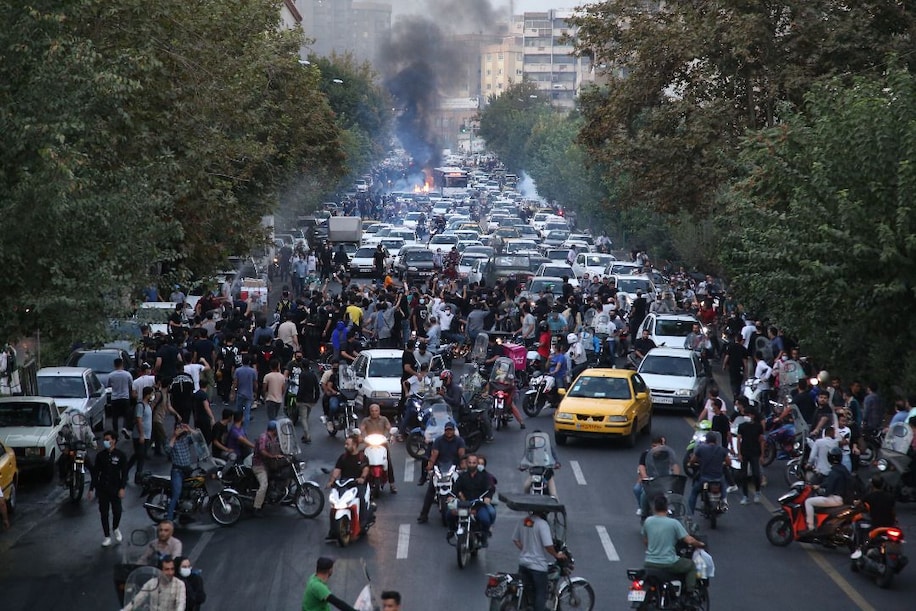
To see Robert Solomon’s claim that anger is energizing, look at what is currently happening in Iran right now. I implore you to look into this issue, or continue doing so, and to allow yourself to feel the anger that rises up inside you as you look into this matter. Since the revolution in 1979, it has been obligatory for all women in Iran to wear a hijab. Recently, Iranian President Ebrahim Raisi reportedly ordered for stricter enforcement of the dress code, leading to the death of Mahsa Amini on September 13th of this year. Mahsa Amini was 22 years old when she was taken to a reeducation center by Iran’s morality police who enforce the hijab rule. She was wearing a hijab when she was seized, however the morality police deemed it not up to their standards. They kidnapped her, beat her to death, and lied to her family that she died of a heart attack. As a result of the injustice of Mahsa Amini’s death, the continuation of the oppressive hijab law, and the Iranian government’s failure to grant basic human rights to women in Iran, Iranian’s are angry. Violence against women in Iran has been allowed by the Iranian government for decades, and people have been angry that whole time.
Let me state that my written words cannot ever express the anger that is being felt by the women in Iran fighting for their basic rights and survival. I don’t think it can be conveyed in words, especially my own, and so I ask you to look for videos. Look at videos of the protests going on right now in Iran. They are hard to watch, but they are beautiful to see.
Solomon acknowledges that there are circumstances where anger is rational, reasonable, and right, but I think he should’ve expounded further on why it’s necessary. No revolution has started peacefully, and anger is fundamental for change to occur. There would not be videos of women burning hijabs in big bonfires if they weren’t angry, nor would Iranian women be videoing themselves shaving their heads in opposition to the strict laws that restrict their freedom. Without reasonable and rational anger, the world would look like how it looked hundreds of years ago; only rich, white men would have the freedom to live how they want. It is time we recognize anger for the tool that it is, and we need to encourage each other to feel anger and direct it to action. Along with sadness, hope, and fear, I feel anger for the women fighting for their rights in Iran. Out of all the emotions that have been triggered from seeing the moving videos posted on Tik Tok, anger has been the most energizing one. It is time for anger to be recognized as an integral part of societal movements. We need to explore how we can teach each other to be angry and to channel that anger.
Shared by: EF
Image Credit: Washington Post- https://www.washingtonpost.com/politics/2022/09/23/iran-protests-biden-goes-faster-farther-than-obama/