Time is one of the most complex phenomena that is fundamental to how we experience and understand the world. We depend on the concept of time for structure; we ask our friends when we are free to hang out and check our phones to get to class on time. This concept we believe as a constant is crucial to our lives and perceptions of the world. It makes sense why so many people are reluctant to believe that the passage of time is not real: that it is merely a concept that we created to perceive the world. This very much pertains to the way we experience our emotions, and how our emotions are a way for us to perceive the world around us.
Time and emotion have an interesting relationship, where both act similarly in function, but one ultimately trumps the other. We cannot seem to let go of the linear appearance of time – we reminisce, anticipate, and “live in the present.” Even these verbs imply that events occur through the passing of time, further indicating that events that happened already and will happen are far from our control. How does one conclude then, that the passage of time is not real in the first place if we are so inclined to do so?
The arguably biggest issue with the “unreality” of time passage would be our beliefs on causality as well as time and emotional asymmetry. As we supposedly move forward in time, we make certain decisions in the present to impact the course of events in the future. Our psychological organization of events also depend on things occurring before, during, and after an instant. Emotional asymmetry seems to prove time’s passage, and it is difficult to conceptualize cognitive and emotional change without looking at the flow of time. It seems as though time manifests itself through passage because of the properties of change; future change is not something that we can read into or predict the same way as we remember the past as it happened. To understand why the future seems so different from the past, we must understand our cognitive functions and how we mistake our psychological processes with time passage.
Similar to how we depend on time for our day-to-day lives, we utilize our emotions to perceive the world as it is. In How Emotions Are Made, Lisa Feldman Barrett writes that “an emotion is your brain’s creation of what your bodily sensations mean, in relation to what is going on around you in the world” (Barrett, 30). We make sense of our physical experience through emotions. Barrett opens the second chapter of her book with a visual illusion, what she calls the “mystery blobs.” After the viewer learns that the image depicts a bee, they will never forget. This visual illusion is an example of how our brain is able to construct ideas (or in this case, an image) through our senses.
Illusions are confusing in nature because what we perceive conflicts with “the truth.” Our brains use sensory cues to create a bigger picture. We then attempt to fill in the gaps with what “makes sense” from other experiences. Cognitive illusions are false “perceptual interferences” based on our assumptions about the world, whether these assumptions are learned or intrinsic to our nature. These illusions seem to prove that what we perceive is not always how it is, which begs the question of whether to even trust our perceptions. Interestingly, these illusions are relevant to how we see the world both emotionally and temporally.
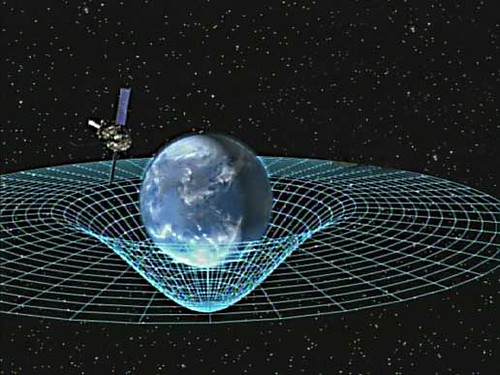
The passage of time is one big illusion in itself – we tend to view our lives as a one-dimensional line, often referred to as the psychological arrow (past vs. future), from when we are born to when we die. However, physicists like Hermann Minkowski and Albert Einstein proved that time is relative to where we are in spacetime. The light-cone visually represents spacetime from a particular observer, as one person’s light-cone will look vastly different from that of another. We now know of this concept of relativity, yet our experiences contradict this “truth.”
The theory of constructed emotions is oddly similar to our experience of time passage, both being very central to how we experience our lives. Barrett writes, “you are not a passive receiver of sensory input but an active constructor of your emotions. From sensory input and past experience, your brain constructs meaning and prescribes action” (Barrett, 31). She argues that without our experiences, our sensory input would mean nothing to us. However, this definition in itself is problematic if we consider the inexistence of time passage.
One solution to this issue is to view what Barrett refers to as our “past experiences” atemporally. In his Critique of Pure Reason, Kant argues that our experiences presuppose time: that time is our way of understanding our experiences (Kant). There is no way for us to view our experiences through an atemporal lens, so Kant believes that we can only think in terms of a succession – relating one experience to another – because we have a schema built in us to interpret our senses in this way. Kant’s argument is somewhat of an extension of Barrett’s theory of constructed emotions. We construct our emotions through our bodily functions and sensory input while relating that particular experience to other events.
The inexistence of time passage brings about questions regarding causality and free-will. The concept of causality is dependent on the passage of time, so if time passage does not exist, causality does not either. Fatalism is the belief that our decisions do not matter because the “future” does not involve other possibilities of events (Bardon). The concept of fatalism clashes with the human yearning for free-will. In A Brief History of the Philosophy of Time, Dr. Adrian Bardon argues that there is no connection between the inexistence of time passage and fatalism: “surely there is some sense in which our choices can influence the course of events; … Unlike truths of mathematics, facts about the course of events are not necessary truths” (Bardon). Perhaps the contingency of events could be accounted for here.
There is still much to uncover about time and space that may well contradict our experiences and the way we perceive the world. Even if our brains can be deceiving, it is not to undermine the importance of our emotions and experiences. Life is all about the journey, no matter how mundane or debilitating it could be. The more we understand our body and emotions, as well as the world around us, the more we feel fulfilled.
Shared by: Sara H.
Image Credit: https://www.flickr.com/photos/nasablueshift/7754612868