“Was struck by the manifest shallowness in the doer [ie Eichmann] which made it impossible to trace the uncontestable evil of his deeds to any deeper level of roots or motives. The deeds were monstrous, but the doer – at least the very effective one now on trial – was quite ordinary, commonplace, and neither demonic nor monstrous” – Hannah Arednt
In her book, Eichman in Jerusalem: A Report on the Banality of Evil, Hanah Arendt observes the trial of Adolf Eichman, a high-ranking Nazi. After observation, she concludes that Eichman was not truly malicious in his acts but was purely brainwashed and followed banal actions, hence the term “banality of evil.” This means that the anger and suffering experienced in the Holocaust could not be directed at the officials simply doing as they were told, but rather, a higher evil to which all participating fell victim.
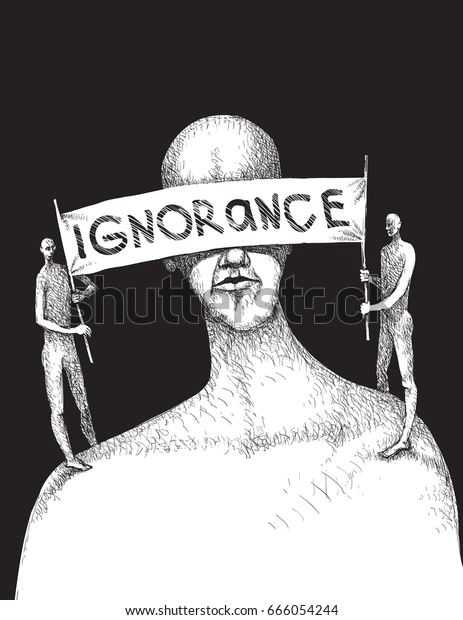
Building off “the banality of evil,” I propose “the banality of ignorance.” In this new term, I mean that people may not have malicious intent toward others, but their ignorant actions and beliefs cause people to do things that may be harmful. Similarly to Arendt, I will analyze cases in which this term has proven evident.
Growing up, I often fluctuated below and above the poverty line. If I wanted makeup, clothes, or to go to the movies with friends, I would have to find the funds myself. I was the eldest of five children and continuously found myself in situations where I played the role of an older sister and a mother. I picked the younger siblings up from soccer practice, cooked dinner, helped with homework, and sometimes put them to bed when our parents were working late. While I realized I had more responsibilities than my peers, my peers did not differ from me drastically in terms of socio-economic status.
I attended a poorly rated public high school in one of the worst states for public education. Despite the lack of resources attending a school as this entailed, I still did all I could to attend a good college and pursue my dreams of becoming a lawyer. I took AP classes, volunteered in NHS and clubs, and graduated with a high GPA. Thankfully, the hard work paid off, and I was accepted on a scholarship to a top-30 university. I was warned about the difficulty of classes, but nothing prepared me for my peers’ ignorance.
Attending an elite private university entails many different things. One of these things is the status of the people that teach and attend the university. I was aware that there were rich people in the world. I was also equally aware that I was not one of those people. I was also unaware or prepared to be surrounded by these people for the next four years. Growing up, I assumed everyone worked hard to achieve their goals – this was my own ignorance and did not reflect reality.
I went from thinking everyone “pulled themselves up from the bootstraps” to the harsh reality that money can get anyone a whole lot further. I had dinner with a friend and her dad during my first year. During the conversation, I mentioned that I was on a first-generation student scholarship, to which he replied, “I didn’t realize that there were still first-generation students; I thought everyone had gone to college by now.” When I talked about clothes with my friends, their faces would be shocked when I told them I did not know a particular designer. Classmates, friends, and even professors assumed I was going abroad my junior year and could not think of one reason why I would not explore Europe for a semester.
How can people think this is normal? Do they really think attending private schools that cost as much as college tuition is “what you have to do for a good education?” The one percent is a completely and utterly ignorant bubble to the 99% of people who, more likely than not, will never get access to the same resources or opportunities—constantly having these conversations with people and being expected to smile and agree made me angry. But what was I actually angry at?
Many of the people who made these comments were close friends I love or professors I respect. They were good people, so why was I so pissed off at them for thinking and saying such stupid things? It is because I was never mad at them. I was mad at a system that enabled their ignorance. I was angry because I wanted everyone to know their privilege and for those who struggle to have the same opportunities as the people I go to school with. In Myisha Cherry’s book, The Case for Rage: Why Anger Is Essential to the Anti-Racist Struggle, Cherry defines this anger as Lordean rage. “In this way, Lordean rage is a metabolized anger– ‘the virtuous channeling of the power and energy of anger without the desire to harm or pass pain.’ It is the call to ‘fight injustice and respect the reality of one’s anger without being destroyed by it’” (Cherry 37).
My anger does not stem from these people; I love some of them and do not want to inflict pain upon them, but I want my anger to be validated. My anger stems from an unjust system perpetuating ignorance to keep the rich prosperous. People like my friends and classmates are a part of this system, but they play their role in an unknowingly banal and ritualistic way.
Where does this leave me? I deserve to be validated for myself and those not in these powerful spaces that can create change. This can only happen if I assert myself powerfully in these spaces. I cannot conform to the standards of the one percent in hopes that they accept me as an outsider. If I am to be in these spaces, it is as someone who is not ignorant of a struggle. It will be as someone who acknowledges their privilege and highlights the privilege of others. While not being accepted is a fear, mainly because I want to be financially stable, I would rather be able to remove a veil of ignorance and stay true to myself rather than become the banal ritualistic corporate robot I grew so much to hate.
Shared by: Kneshia