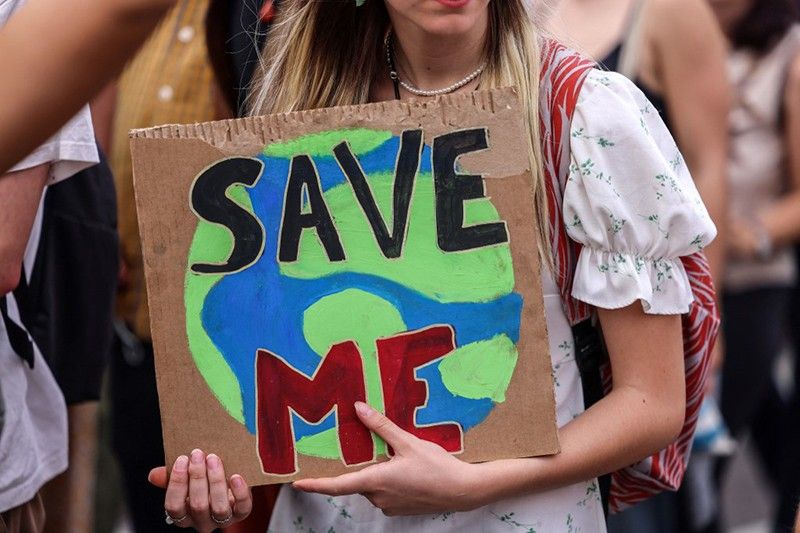
“Understanding that fear is at the root of much of our politics enables us to remain calms and make better decisions. What do you fear?” (Ray, p. 110-111).
Okay, I’m gonna be honest. Politics are not exactly everyone’s favorite topic right now. With the current environment we’ve got going on, it’s no surprise; midterms are around the corner, and people from all sides are losing hope. Me, being a conservative, always worries about how people perceive me. For example:
“OMG, not another Trumper.”
“Don’t you understand that the vaccine protects us?!”
“Can’t you understand that the Earth is burning up?!?!”
Oof.
Well, first things first, I’m not Trump’s biggest fan. Nor do I despise vaccines. My dad’s a heart surgeon; I’ve heard a thing or two about the efficacy of the vaccines (they work). And, shockingly as it may seem to some, I do care about the environment. We exist, folks. Conservatives who care about the environment aren’t that few and far between, and the philosophical origin of climate emotions aren’t exclusive to one party, either. We all feel the anxiety. It just manifests in different ways.
When I was a kid, one of the career paths I thought seriously about was geology. I LOVED the Earth. I loved its intricate and delicate rock formations, I loved volcanoes, and I loved learning where and how the planet split itself apart through its tectonic plates. There was much to love about the world we’ve been given, and I took my eighth-grade geology class in like a sponge. In fact, I even went on two geology trips with my school to see some of the beautiful things we studied in class. It was then that I truly fell in love with the world around me, and I’ve always wanted my kids to see those things, too.
I didn’t begin to worry about the climate heavily until recently. I never was one to deny the science, but I didn’t have enough knowledge or, honestly, drive to seek the truth. Until I started reading more and learning more, I was climate neutral. I think I needed a push in the right direction, and Sarah Jaquette Ray’s book titled A Field Guide to Climate Anxiety kind of helped move that process along pretty quickly. I was drawn to multiple chapters, but one in particular caught my attention, as its climate change perspective ran parallel to politics and, specifically, the political affiliation I typically side with.
In the chapter, Ray talks about the importance of “being less right and more in relation.” The perspective isn’t novel, but for some reason, when someone floats the idea into the general discourse, it feels kind of like a breath of fresh air. And it makes sense—emotions run high when it comes to politics, and any kind of perspective we can latch onto that feels like a hug rather than a whip feels good. What’s more, regardless of the political party you champion for, you feel the hopelessness along with the rest of us in the United States.
Ray says, “…most of our beliefs have nothing to do with science and everything to do with emotions” (p. 97). To that, I can agree. One of the main issues surrounding the differences in political opinions right now is the idea that emotions run high. No matter what you believe in, emotions are the driving force behind your beliefs. You see it all the time on the news, and the Twitter political wars definitely don’t add much positivity to the news cycle. But it’s true—no matter the place you get your news, there’s not a way to avoid the emotional overload that comes with the current climate. But the origin of the emotions is what I, as a philosophy student, am concerned with. Upon some reflection, the origin actually appears to come from the same place. Regardless of whether you bleed blue or red, we’re all emotional. We’re all, to be honest, anxious. I guess it makes sense, then, to say that “we need to move away from the perception that the climate movement belongs to the left or the privileged or the powerful” (Ray p. 98).
Okay, so if emotions come from similar anxiety, what’s the difference between the two parties as the anxiety manifests itself? Well, if we look at those on the right that deny climate, it’s easier to say that they’re dumb, or uneducated, or ignorant. The difficulty comes from implementing compassion toward those who disagree with us. If you apply compassion to the issue, it becomes easier to say that their denial comes from anxiety. Take someone who worries about mortality. Obviously, death will come for us all in the end, but to deny its existence throughout the day-to-day helps many people cope with the heavy emotions that come from realizing the inevitable. Cultivating compassion is paramount, and Ray agrees, saying that “we should replace horror with curiosity and compassion” (p. 110). Seeing conservatives who deny the inevitable, meeting them where they are, and cultivating healthy dialogue with compassion is the key to bridging the gap between the parties when it comes to the issue of climate.
Taking this realization into account, I want to bring it back to the future of what young conservatives are talking about with regard to the climate. According to many younger conservatives, the climate crisis is on their radar. In fact, a young Republican speaks on the American Conservative Coalition, stating that “We can talk about this. Conservatives that care about the environment do exist” (Ray p. 111). And they’re right; we do exist. Not all of us conservatives are stuffy old men sitting in a chamber harping on tradition that doesn’t apply to the world we live in now. Most young conservatives I know are wildly concerned with tradition, but they also advocate for new tradition, such as climate protection and advocacy. They see the climate crisis as a traditional fight. I happen to agree.
Putting down the swords when it comes to the inevitable needs to be a part of the conversation. We can’t, according to the origin of all parties’ emotions, continue to fight against one another. The fight is against our own shortcomings. The sooner we, as a nation, continue to wake up to this fact, the better for our world. We’re the most industrialized nation on the planet; we have the ability to make a great change. This change starts with compassionate dialogue and understanding of one another’s emotional philosophy. The power of the pause between action and reaction is the power of the conversation, and the power of the conversation is also our emotional regulation. We’re all human, and we’re all faced with the mission of saving the planet. Political parties and their bickering need not stand in the way of such battles.
Shared by: MK Morris