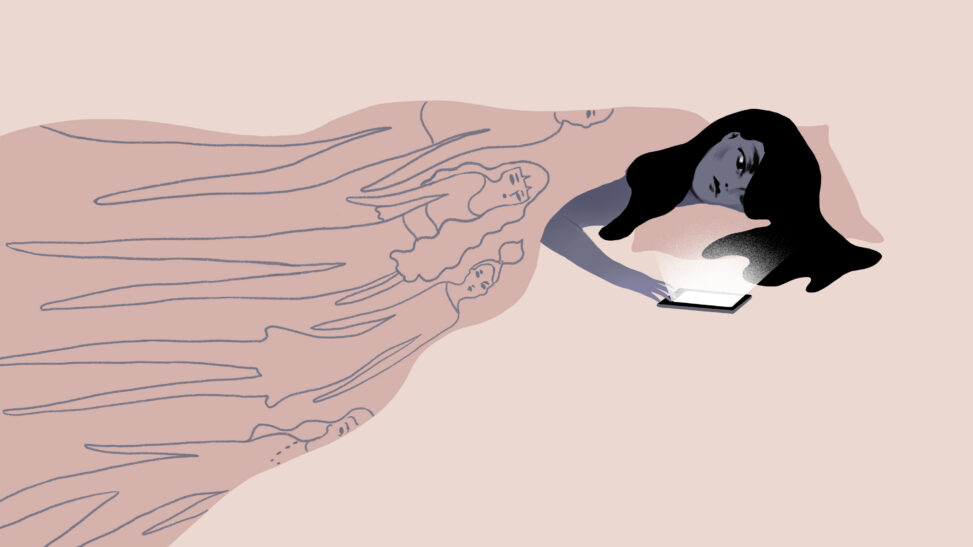
Suicide rates are rising. We’ve seen the statistics, we’ve read it in the news, and unfortunately, some of us may have been impacted personally. This troubling trend is mostly prevalent among teens and young adults. In the work How Emotions are Made, author Lisa Feldman Barret addresses this troubling trend, recognizing “The World Health Organization projects that by 2030, depression will cause more premature deaths and years of disability than cancer, stroke, heart disease, war, or accidents.” This is a profoundly troubling statistic, one that is difficult to fully comprehend. But how and why could this be occurring?
If you ask anyone over the age of 40, they’ll say it’s the damn phones. And I’m hesitant to reveal my inner boomer, but I may agree (to an extent). The rise of the internet and social media over the past several decades has brought an unprecedented access to knowledge. Any momentary confusion can be resolved by Google. Any personal hardship can be broadcast to the masses. And while this access to information seems encouraging and potentially enlightening, it begs the question of constant exposure. Is consistent access to information and personal content affecting us, biological, psychologically, or maybe philosophically? How have our emotional lives changed in this era of information?
Barrett takes a constructivist view of emotions throughout How Emotions are Made, arguing that emotions are not innate but rather constructed from social and personal experience. She writes, “Construction treats the world like a sheet of pastry, and your concepts are cookie cutters that carve boundaries, not because the boundaries are natural, but because they’re useful or desirable.” This stance holds that the brain creates action patterns based on previous experiences, which allow it to navigate new situations with ease simply by following relevant patterns. Thus, our social and cultural context, as well as personal experiences, are integral in our perception of reality. This is a mildly terrifying concept, particularly in light of the massive informational exposure we now face.
It is normal now to interact with several hours of media per day. The modern use of social media as almost a public diary means this media content likely contains a vast array of personal narratives. Content creators share their experiences, opinions and stories freely, and the media mantra of a shock factor generating revenue has remained; much of the content produced includes stories of trauma, abuse, hardship, depression, eating disorders and more. From a constructivist perspective, this exposure must shape our neural action patterns to some degree. Could it be possible that exposure on social media builds action patterns that contribute to depression?
Barret discusses depression similarly to chronic pain, in that it involves miscalculated action patterns in the brain. Essentially, Barret argues that depression arises from an inability to correct prediction inaccuracies that occur when following previously established action patterns. She writes, “We know that your brain continually predicts your body’s energy needs based on past experience. Under normal circumstances, your brain also corrects its predictions based on actual sensory information from your body. But what if this correction wasn’t working properly? Your momentary experience would be constructed from the past but not corrected by the present. In general terms, that’s what I think is happening in depression.” Here, Barrett associates depression with a physiological inability to reconcile current sensory input with past action patterns. She argues that this leads to a perception of reality based in the past that does not align with present reality.
Action patterns built on social and cultural experience build the neural action patterns our brains mistakenly follow. If social media consumption makes up the majority of our daily socialization, the content we consume may impact our perception of reality. While accounts may aim to de-stigmatize mental health issues, or share inspiring journeys of recovery, the message may be distorted by the minds that encounter this content. What was intended as a cautionary tale could mistakenly become a set of blueprints.
Clearly depression is not as simple as this suggests. Barrett recognizes that, “depression is an imbalance of many entwined parts of the nervous system that we can understand only by treating the whole person, not by treating one system in isolation like the parts of a machine…It’s a neurological, metabolic, and immunologic disease.” Misconstrued action patterns alone won’t lead to depression. But if an individual’s body is experiencing systematic stress of some sort, they may be more prone to these miscalculations in neural action patterns. Simply put, an individual who has already experienced stress or trauma may be more susceptible to miscalculations in neural action patterns, and more susceptible to changes in perception as a result.
To think this through in the context of modern youth, I’ll consider my own exposure to adolescent suicide. My highschool, a public school in a Massachusetts suburb, fostered a culture of perfectionism and competition. It also experienced the loss of six youth by suicide during my four years there. What I found interesting as a student during this suicide cluster was the progressive ban on media coverage as the tragedy continued. The first loss of life was accompanied by a public outpouring of grief, including the school FaceBook group, Twitter, and newspaper. By the third, there was essentially silence. At this point the school was following current research on preventing suicide clusters, which promoted radio silence across public platforms. The thinking was that “glorification” would lead to copy-cat attempts.
By a constructivist view, media coverage could portray a social experience in which suicide was not only normal, but a way of gaining recognition for suffering. It could provide action patterns for damaged youth to mistakenly interpret their own feelings. As Barrett hypothesized, perhaps these damaged and impressionable minds would interpret sensory information (such as stress, exhaustion, etc) along the neural pathways of depression, tragedy, and glorified recognition.
Extending beyond just my small town, global media could similarly impact the action patterns of young minds. Whether the media intends to remember, de-stigmatize, glorify, or condemn may not matter–mere exposure could serve as normalization, enough for a systemically damaged individual to misinterpret their own sensory experience.
This claim hinges on the idea that the system of the person consuming the media is damaged. What causes this damage, and is it widespread enough to impact enough youth to account for the rise in suicide rates? In my town, the culture of perfectionism, comparison and stress established damage easily. I’d argue that the same holds true for social media. Not all the content one consumes on social media is negative; conversely, much of it is overly perfect and fake. Posts are curated to garner likes and compliments. This gamification of the human experience establishes an environment of comparison and self loathing, priming perfect circumstances to mis-interpret one’s sensory reality.
Barret toys with this idea as well, writing “The traditional view of depression is that negative thoughts cause negative feelings. I’m suggesting it’s the other way around. Your feelings right now drive your next thought, as well as your perceptions, as predictions.” This suggests that an emotionally depleted individual is more susceptible to negative predictions, which kick-starts a cycle of negative affect that self-fulfills, and manifests with the mental and physical symptoms of depression.
The constructivist theory of emotion provides an understanding of how the way we interact socially impacts our neurological perceptions, and ultimately our emotional state. If our primary social and cultural exposure includes media consumption that normalizes tragedy, then our neural response will evolve to expect this negativity. Chronic stress, brought upon an individual by any means, can further prime the mind to follow these action patterns. This manifests as consistently over metabolizing stored energy (compared to one’s activity), resulting in fatigue and continued negativity. This manifests as a generation of depressed youth.
I struggle with Barrett’s exact constructivist approach in that it seems to dismiss the lived experience of individuals. Associating depression with a failed assessment of stimuli negates the fact that these individuals may be experiencing truth. Their brains may be following the correct action patterns based on the amount of stress and pressure the individual is facing. Their body may need to enter a fatigued state, overconsuming nutrients simply to sustain life in the weight of immense pressure. Is depression a miscalculation on the part of a diseased mind, or a mind processing overwhelming stimuli in a self-destructive manner (in the same way the body self-destructs during fever to overcome bacterial infection)?
While I may not be fully convinced by Barrett’s approach, I do believe that constructivist theory can account for one’s personal, cultural, and social experiences impacting their perceptions, and ultimately their mental health. As suicide rates continue to rise, the blame should not be placed on the younger generation for over sensitivity or irrationality. Instead, we must look culturally at what environment we have created, and how it could break down the emotional wellness of individuals.
Shared by: Anonymous
Image Credit: https://www.npr.org/sections/health-shots/2019/05/17/724299570/suicide-rate-among-girls-rising-faster-than-for-boys-study-finds