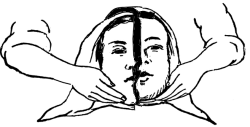
The origins of emotions are constantly being studied by philosophers, scientists, psychologists, etc. With several proposed beliefs of “what an emotion is”, I find it difficult to give one theory credit for encompassing the entire truth. That being said, in this paper I will work to prove cognitivism alone is incapable of explaining human emotions.
If cognitivism alone could explain human emotions, then all emotions should be grounded in judgements. However, as we will see not all emotions are grounded in judgments. Therefore, cognitivism alone cannot explain human emotions. I support this view by applying it to the world example of adoption. The long term emotional implications that adoption has on infants who don’t have cognitive abilities at the time of adoption, threatens the idea that all emotions are cognitive.
This paper will begin with an introduction to the cognitive and non-cognitive theories of emotions. I will then explain the emotional implications of adoption on infants, by utilizing research conducted by Debbie Hindle and Graham Shulman. Once gaining an understanding of their findings related to adoption, I will prove the theory of cognitivism is not sufficient in explaining the emotional implications of adoption on individuals. I will address potential counterarguments to mine, by incorporating views from philosopher Robert Soloman, author of True to Our Feelings, who supports the belief that all emotions are cognitive.
Cognitive theorists have long argued that all emotions are rooted in one’s judgements or perceptions of a situation or environment. It may help to begin by defining some of these key words. The Lexico Dictionary powered by Oxford defines judgment as “the ability to make considered decisions or come to sensible conclusions.” Note the use of the word “ability.” This word implies the act of judging is one that requires skill or a means of possession. I will develop the implications of this nuance later, for now try to remember judgments are not possessed universally- an ability is required. The second key word in the definition is perception which Lexico defines as “The ability to see, hear, or become aware of something through the senses.” Again, we see usage of the word “ability.” With a better grasp on the definition of “cognition” we can begin questioning its role in the origination of our emotions.
According to several different emotional theories, cognition begins at the point of the information-processing continuum “where learning or experiences produce mental representations and memory sufficient to mediate comparison processes and discrimination.” (Carroll, 1993) It is only at this higher order of mental processing that cognitions may play a role in emotion activation.
Cognitive theorists rely on four assumptions to essentially prove their theory valid. The assumptions are as follows: 1. Thoughts are mentally represented 2. Words are the vehicles of thought 3. We have direct access to our thought 4. Cognition constitutes/ causes emotions. For the purposes of this paper I want to focus on assumption number 3 and 4 as they are essential to disproving this theory as the ultimate truth of emotions. In order to arrive at assumption number 4, the preceding assumption must hold true. I will prove these assumptions are not always valid, leading restrictions on the ways that cognitions and emotions can relate to exist.
Adoption serves as an interesting topic of study due to its obscure nature. It poses many questions regarding the nature vs nurture debate, the implications of neglect, the types of attachment styles, etc. Since adoption includes complex and interrelating variables, it is difficult to make certain conclusions on adoptions impact on children. Although we may not be certain of the reasoning, researchers have spotted patterns amongst adopted children indicating they are at higher risk for emotional disturbances than non-adopted children. Some of these emotional disturbances include issues of: withdrawal, attachment, security, and depression.
Interestingly this risk was found to be higher for domestic adoptions vs international. It is to be noted that the studied pool of individuals were all adopted as infants. It is vital to note infants have not yet developed cognitive abilities at this age. This inability has poses some serious implications to the cognitive theory as it relates to emotions. We know cognition consists of judgements and perceptions, but the infants studied would be unable to form such intricacies at such a young age.
Remember our definition of cognition listed earlier, we know judgements as perceptions are skills that would not yet be acquired. Since these higher levels of cognition have not yet been developed in the children, their emotional disturbances stemming from adoption must be embedded in the non-cognitive origins, causing them to rely on processes elicited by their “biologically prepared, genetically inherited stimuli.”
A cognitive theorist would obviously disagree with this viewpoint. Take Robert Soloman for example: Soloman believes that every emotion is “a cognitively and value-rich phenomenon…It necessarily involves feeling and judgment as well as physiology.” Soloman views the non-cognitive theories as insufficient to explaining emotions as they “neglect both the pliability of the brain and the pervasiveness of culture in human development” (p.16)
Knowing Soloman’s stance we can assume he would be skeptical of the infants lack of cognitive ability before adoption. Soloman believes emotions are built upon continuous structures of one’s life. This structure includes one’s thinking and behavior, what one pays attention to, what one remembers, what one imagines, even what one dreams” (Soloman, p.17) Soloman may make the argument that these emotional disturbances became embedded in the adopted individual’s structures as “pre-adoptive stressors” prior to their adoption. Despite the belief that children of this age do not have cognitive abilities, Soloman would argue they do have the ability to create and build upon their continuous structures. These pre-adoptive stressors entered the infants’ continuous structures during a critical period of their development. The lingering presence of the stressors implies the children never contextualized their experiences, leading them to feel a type of “disengagement with their world”. This disengagement leaves one with scattered judgments and perceptions of the world. Without an understood meaning to the significance of the stressors in the individual’s life, emotional disturbances evolve.
I was interested to elaborate upon this viewpoint, so I spoke to my sister Leigh Ann Labate who was adopted at the age of four months; she is now 25 years old. I began by asking her the simple yet complex question: “What do you think life if about? What are you living for?” With a hesitation in her response she said “Life is about being happy and making others happy.” I followed up by asking when she became firm in her view? This answer took much longer to come. Eventually she answered by saying “I wouldn’t say I’m firm in this belief, I just thought it answered the question well.” I proceeded to ask her if she felt her adoption influenced the way she viewed life. I found her response to be revealing. “No I try not to think about my adoption in the grand scheme of life.” Perhaps this answer is indicative of what Soloman would argue. This avoidance to engage with the world due to stressful early emotions or experiences, may be responsible for individuals’ emotional issues. I’m not claiming my sister’s reluctance to assign meaning to her adoption is proof that all adopted children felt/feel disengaged with their world at one point, but it does help validate Soloman’s cognitive perspective.
Another argument a cognitivist such as Soloman could make is these “emotional disturbances” discovered in the adopted individuals are not in fact real emotions, but rather core capacities that were disturbed before adoption. By labeling these disturbances as core capacities rather than emotions, Soloman can escape the need to defend the cognitive abilities of infants. This argument one’s the risk of facing methodological issues. Emotions are very difficult to objectively define, therefore Soloman would struggle to defend his view of an emotion as the correct one.
Perhaps an alternate reasoning for the emotional disturbance experiences by adopted children can be explained through non cognitive terms. Non cognitivists don’t believe all emotions stem from thought, but rather from something reflex-like. “Non-cognitive processes may be elicited by particular environmental features, biologically prepared, genetically disposed stimuli, or “natural clues.”’ (Izard, C.E) Such processes lead to emotional responses, but they do not require cognition. In short, non-cognitivist believe the cause of emotions may be best understood in nonverbal terms. For this reason, infants rely on these types of processes to make sense of their world during the first few months of life, as they are incapable of cognitive mentation. The non-cognitive perspective would claim these “types of processes” are responsible for the emotional disturbances experienced by adopted individuals later in life.
In bringing to light the example of adoption as it relates to cognitive theory, my hope is to expand your way of thinking about the origins or causes of emotions. By raising the question of cause of emotional disturbances on children without cognitive abilities, the cognitive theory is challenged. By referencing Soloman, we also see some potential counterarguments that may arise in response to the threatening cognitivists questions. The non-cognitive perspective was introduced to serve as an additional potential source of emotional origins alongside the cognitive perspective. Perhaps there are some non-cognitive factors contributing the adopted individuals’ emotional experiences. The point to this debate is we must not narrow our understanding of emotions through one singular lens. Through the example of adoption, we are able to see differing views can both provide us with valid reasoning to understand emotions. Rather than discrediting a perspective we should attempt to find the value in each, as we form our own opinions.
Work Cited:
Izard, Carroll E. “Four Systems for Emotion Activation: Cognitive and Noncognitive Processes.” Psychological Review, vol. 100, no. 1, Jan. 1993, pp. 68–90.
Robert Solomon, True to Our Feelings: What Our Emotions are Really Telling Us (Oxford University Press, 2007)
Shared by: Laura Labate
Image Credit: https://www.consciousentities.com/2017/01/split-brain-not-reproducible/