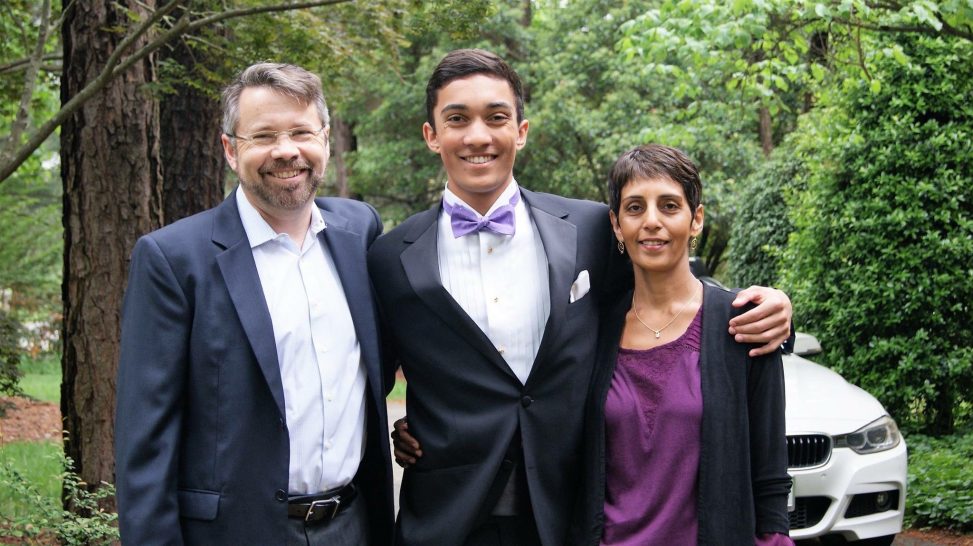
[This letter is actually a memoir about myself, but I write in second person to allow for readers to connect with the anecdotes if applicable.]
Dear Biracial Boy,
I’m sorry I even have to refer to you by that term. You did not ask for that social assignment to be one of your primary identifiers for outsiders, but it unfortunately is. Well, that’s if you appear racially ambiguous rather than passing for white. If you happened to be white, or at least looked like it, you’d just be “boy.” This letter is for those of us who don’t have that undercover status.
I write to you today to reflect on the experiences that we share as biracial boys. I do this primarily to help fill a void that I felt deeply in my childhood: the void of someone validating my lived experience.
When you enter elementary school, your skin isn’t “purely” white or black. Your identity cannot be directly delineated from your skin color. You don’t live in the “old money” subdivisions, but you also can’t claim the housing projects as your stomping grounds either. As a result, you don’t squarely fit into a singular social group or share a specific lived experience. At the lunch table, you’re not buying lunch (or receiving it at reduced price), but you’re also not packing Lunchables and Little Debbie desserts since your mom said they were too expensive and unhealthy. You’re stuck somewhere in between the two extremes.
By marrying each other, your parents refused to conform. So, your childhood experience was destined to not conform either. Your mom wasn’t going to be a stay-at-home mom, and your dad wasn’t going to teach you how to play America’s hypermasculine sports (e.g. football, baseball, etc.). They met while studying in Scotland: one a white male from rural Illinois, the other from the impoverished island of Mauritius.
When you were a child, you didn’t realize how fortunate you were to break free of the status quo’s chains at such a young age. You were pissed that you couldn’t be normal. That you had to hide pictures of your family, pray that your teacher never said your middle name aloud, and act like you ate traditional Thanksgiving food. When the elementary school handed out personal information sheets for you to verify, you didn’t understand why you couldn’t feel confident in putting your pencil on the race/ethnicity bubbles. The gray hue of the graphite reflected the exact ambiguity you felt about your identity. If your mom immigrated from an island off the coast of Madagascar, why couldn’t you bubble in “African-American”? Your sister suggested that you should instead put “Asian” since you both pass for Indian by American standards.
These were some of the everyday struggles; the small pokes that made you only slightly uncomfortable. It wasn’t anything too serious, and maybe you were overthinking it.
But then there were moments that weren’t mere pokes. Instead, you absorbed gut punches.
At your paternal grandfather’s funeral, you were asked by two old white women if you and your sister were adopted. Once you started growing the slightest amount of facial hair in 5th grade, your airport security experiences started becoming a lot longer. And when you began spending time around white girls from school, her family and friends made comments or facial expressions – both subtle and overt – that reminded you to be careful.
The message became clear. You’re not normal. You’re part of the “other.”
You’re one of the few people of color on your baseball teams, in your Boy Scout troop, and in your classes.
People who look like you don’t really belong in the spaces that intrigue you. But your youth equated to obliviousness, and you just wanted to follow your dad’s footsteps when possible.
Things became trickier when you, as well as your peers, began to absorb and recreate a racial consciousness in middle schools. Your questions about the identification bubbles took a whole new level when you had to start making major choices about your public identity. Would you be an Honors/IB student? Or would you care more about sports? Would you dress in Vineyard Vines and Sperry’s, or would you wear sweatpants and t-shirts?
These questions didn’t seem racialized, but they inherently were. Baggy clothes felt most comfortable, and they matched the athletes and rappers that you idolized. You were drawn to figures like Michael Jordan and Soulja Boy, but you were told to redirect your affinities to more useful things than basketball and rap.
For so long, you tried to juggle both. You wore your Sperry’s with khakis to school and would quickly change into your Kobe’s with oversized basketball shorts to the nearby YMCA gym. You spoke near-perfect English in the classroom and then dished out slang on the basketball court. At school, you were frequently the darkest person in the room. On the court, you were often teased for being too pale. To be accepted in both spaces, you became a chameleon of sorts.
You felt talented to be a chameleon, up until your friend groups and their respective spaces unexpectedly crossed paths. How do you speak or present yourself when your white friends show up to play basketball in your non-white space? Do you keep trash-talking, cursing, and making jokes about needing more lotion on your ashy legs? Or do you clean yourself up for the people who hold the most social capital?
If only there was an instruction manual for these decisions.
When both friend groups caught on to your chameleon activity, they felt deceived and betrayed. You weren’t really who you told them you were.
These dilemmas stretched to your extended family, too. You were the darkest cousin of your American family, and you were one of the lightest in your Mauritian family. You didn’t understand the inside jokes of one, and you couldn’t decipher the language of the other. Like most things, you’d eventually learn enough to be aware of the conversation going on, but you were rarely included. The only people who genuinely felt like family were those who slept in the same house as you every night.
You were welcomed everywhere, but you were also unwelcomed everywhere. You had enough street cred to be invited inside the metaphorical house, but not enough to have a seat at anyone’s table. In the few moments when you felt that seat open to you, it often became clear that you were invited as the token “other” to join the table of regular attendees.
When you decided to embrace your white side more than your non-white side in high school, baseball and school became your life. Your efforts on the baseball field didn’t matter much though, since most people confused you with Luis, the other brown boy on the team. So, you really turned to academia the final two years of high school.
Yet when you were accepted to Stanford or received a full merit scholarship to Wake Forest, such accomplishments were reduced to gripes about affirmative action from your peers.
Your biracial status felt, and will continue to feel, inescapable.
Until your voice was liberated in college, most people never knew of these struggles you endured. However, you continually ask yourself: “Is it okay to voice these grievances? To take up space by sharing my experiences? Is it right to do this when I indeed hold some white privilege? When it could be much worse?”
Some people accuse you of double-dipping. You benefit from white privilege, but you also benefit from affirmative action. You have the hair texture, facial features, linguistic dialect, and parental education/occupation background of white people. You also have the skin tone, overseas trips, extended family, and cultural knowledge of non-white people.
You also don’t face the complete palette of challenges that you would if you were “fully” black or Latinx.
You should therefore be happy.
This narrative made sense up until your sophomore year of college, when you were challenged by a professor to flesh out your story. You deserve to tell your story, grievances and privileges alike. You have experienced interpersonal racism, and you are not a racial imposter.
Your problems are real to you, and they are worth contributing to the larger discussion about race and privilege. Your chameleon status can help bridge perspectives between different populations. Your experiences can help validate the lived experiences of another biracial boy.
Do not allow your voice to be silenced or ignored by others or yourself. You have a right – nay, a duty – to be unhappy, to desire change, and to voice your version of the biracial experience.
Contrasting your life of liminality, this is one decision about which you should feel certain.
In solidarity,
Kyle Raj Adams
Shared by: Kyle Adams