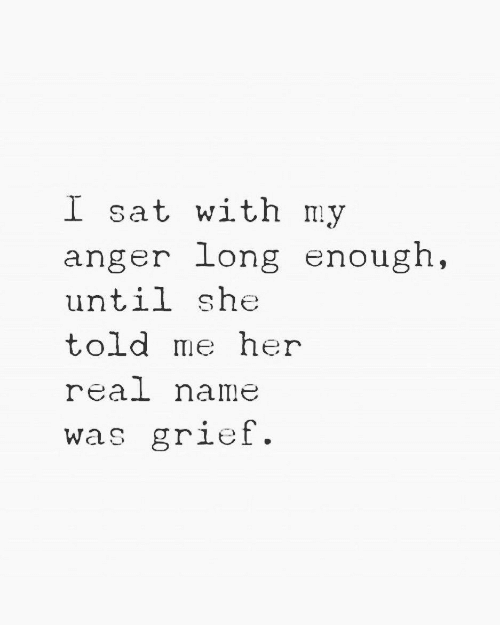
Much of my time lately has been spent in a state of reflection. I’ve been driving a lot, I’ve been spending a considerable amount of time alone, and I’ve been writing. These activities tend to lend themselves well to the act of reflection. Much of my time, therefore, has been spent there with my activities. Some of my musings are as follows:
1. Distance is crucial at times, but too much distance between yourself and your emotions is a morbid error.
2. Time is not meaningless, regardless of what philosophers say about the space and time of our universe.
3. On the topic of time, it is through it that we may access memories afforded to us by a once-gleaming past present.
4. The ether and God can coexist, as my grandfather was a deacon in the presbyterian church, but he believed in such a Godly force as the ether that retained vast influence over the earth.
5. Grieving does not make sense. What the fuck is grief?
It is true that I have been reflecting, though I worry that my reflection is not enough. However, because of my curious nature and the very real passing of a family member, it is an activity that above all that I listed earlier, will take precedence and is the driving force behind the subordinate activities listed. And perhaps accompanying this state of reflection and accompanying its activities are states of confusion, betrayal, quiet anger, and emptiness. These, these horsemen, are what I am currently exploring.
I am not sure how to grieve. I am also not sure if there is a proper way to do such a thing. We don’t get courses on how to do it, and if we’re shown some method that’s “proven to work,” it likely only will for a select few.
A universal part of living is grieving, but no one’s able to tell you how to do it.
Isn’t that a scary thought?
To begin, the state of confusion is likely due to the lack of knowledge we mortal folk possess about the reality of death. We do not know where we go, and we do not know what happens once we arrive at a place, if we do, after this life. Humans are curious by nature, and we like to “know” the truth. This tendency of ours births the subjects of science and religion, all previous birthchildren of the grand umbrella of philosophy. We do not like to be confused, but such an element seems to be a crucial one of grief. It is impossible to explore the idea of grief if we do not take into account the very real chokehold that confusion has on us as we mourn the lost. I do not have an answer for the confusion other than we must remain patient until we learn for ourselves what an afterlife could look like, if there exists such a thing, as Christians such as myself want to believe. This belief does not cancel confusion out for others, however, and that is where my knowledge stops of the feeling. Perhaps confusion spawns from being “taken too soon,” from the lack of knowledge of health concerns, or for quite a specific reason only significant to a singular family. Confusion lurks in many corners—it is not wisely to be forgotten.
This confusion straddles betrayal, a feeling that lends itself well into the void left by someone who’s departed this world. Some may feel betrayed by biology, or by the departed themselves. I feel betrayed by the Lord. My grandfather accomplished more in his eighty years that most would in two long centuries, and God allowed a disease to ravage the innards? He would allow this disease to decompose his brain after the beautiful life he led? These questions echo around in my mind, and along with the aforementioned confusion, I am left here feeling betrayed. Life is a gift that He has given us, but why, then, would He allow something awful to tarnish the last few good years he could have spent able-bodied? Still more confusing, how did my grandfather keep these demons at bay while he was sick? How was he able to keep his spirit high above the disease? More confusion leads to more confusion which leads to more betrayal, and I could only hope that I learn his secret to a gift that kept him from drowning in disease’s physicality (perhaps, though, through the memories of him. Thank you, time).
The quiet anger, then, must be a result of both of these feelings which are preliminary lighthouses in the void of grief. A myriad of information is out there about anger and its healthy form as well as its unhealthy form, and we are often taught that the unhealthy form spawns during the most inconvenient of times (such as in grief). The unhealthy form is branded typically as “rage,” which does not lend itself well to the quiet anger at hand. No, this kind of anger does not show itself in a loud and unbridled manner as “typical rage;” though it possesses some of the same qualities as the rage we often think about, it must be something different altogether. According to Myisha Cherry, an accomplished thinker actively making the case for rage, not many philosophers have taken the route of describing different varieties of anger (Cherry, 12). There’s not much literature out there that dives deeply into the kinds of anger we feel, meaning yet again, that the course toward grief’s quiet anger has become difficult to chart, even with the lighthouses described earlier.
That being said, Cherry provides an “image variation view” of anger, which seemingly welcomes all varieties of anger into its country club (Cherry, 12). While there are, according to her, five distinct kinds of political anger, we are not so concerned with politics; we want to envelop ourselves in the marrow of grief, and the quiet anger present in me is the next obstacle to beat in the process. Broadly speaking, Cherry gives three areas of thought that describe what philosophers consider anger to be in their musings: is it good, bad, neither, quiet, or helpful? Those philosophers in the “concern distinction” school of thought categorize anger into what it is fundamentally surrounding. If the reasons are moral, the anger is acceptable, and vice versa. Within the “intent distinction” school of thought, anger is acceptable depending on the desire of the person. For example, if harm is intended, the anger is not desirable. If the anger is present because respect is demanded, the anger is acceptable. Finally, the “type distinction” school of thought views anger as a newspaper-black and white categorical listings of its types. Aristotle describes moderated versus unmoderated anger, and these adversaries are found in the type class of anger’s schools of thought (Cherry, 13).
I think my quiet anger falls gently into each of the three schools of thought depending on the manner in which it is shown. In short, though I am not an expert on how to grieve, I believe my anger to be acceptable. The only reason, according to the dichotomous thought supported by these schools of thought, when it would not be acceptable would be if I acted immorally, with an intention of harm, or in an unmoderated fashion. By that simple equation, my anger is justifiable, but is it truly allowed? Can I be angry with myself? Can I be angry with God? Do I deserve to feel angry because of the symphony being composed by confusion and betrayal? The void of emptiness in which these questions ring is vast, and the song echoes around without dampeners.
This void, this emptiness, is the medium for other emotions to swim their tiny bodies around in. I say emptiness because the confusion, the betrayal, and the anger are miniscule in comparison to the hole that has been left in my heart, as my grandfather was a human that was larger than the average life. God, do not let me drift into the void along with the swimming emotions. I will stand on its bank and continue to be curious, if You are so willing.
My musings have led me to this void. I stare into it, unsure.
That is all, I suppose.
Shared by: MK Morris