Recently, one of my best friends got into a relationship. Of course, I am happy for him. However, after my friends found a partner, I found my schedule had been disturbed a lot and my many daily habits had been changed. It strongly influenced my emotions, and I generated many negative emotions at the time. Trying to figure out a solution, I had a talk with my friend about the situation and my feelings, and our conversation related to an interesting word, possession.
My negative feelings are generated from my perspective because my life has changed. During the summer, my friends and I rent a 2b2b apartment outside campus. Before he got into a relationship, we often had breakfast and drove to school together. We shared chores and hung out together on the Weekend. But when he got into a relationship, I would have breakfast and go to campus on my own, and I could not find him on the Weekend. I feel uncomfortable about these changes and need time to adjust, and I generate feelings like disappointment and anger when I see my life has been changed. From my friend’s perspective, he was confused about why I felt bad after he got into a relationship. I understand he needs to put the time into his relationship, but I still had bad feelings when my daily routine was changed and I had less time with him. In our talk, we both agree that part of the reason I have bad feelings belongs to possessiveness. Here I define possession as demanding someone’s attention, but not all.
In academics, possession is defined as a psychological phenomenon. It usually comes with many negative emotions and felt annoyed. Possession exists in all kinds of relations. For example, in families, parents have possession of their kids; they sometimes intend to impose their thoughts and plans on their children; In friendships, friends possess each other. They want to hang out together and don’t want others to join the friend group; In relationships, lovers, of course, have possessions to each other, and in most situations, the possession in relationships is strongest because people do not want to accept the third people in the relationship.
If we search possession on the internet, they often state the possession as a bad or a diswanted part of the relationship, and they are trying to separate the possession and the love. However, as Solomon mentioned in the anger chapter, there are no bad emotions, and I also believe possession is important or essential in the relationship. Therefore, we can analyze the emotions contained in the possession.
The first and the most obvious one is anger. Our possession often reflects our anger. When situations arouse our possession, we usually reflect on anger. As Solomon states, anger is a cognitive emotion and needs to interact with others. Part of anger in the possession will be the anger from people who have possession to those who attract attention and time. In this way, possession is terrible because people are angry with someone unrelated to them, and the people who are angered actually do nothing. For example, when my schedule was disturbed, more than half of my anger was toward my friend’s partner, which is wrong because my friend’s partner did nothing to me and was dating my friends. In this situation, we can say the anger is bad and need us to control our anger. However, there is still some anger is to the second person in the relation. In my situation, it is my friend. My anger toward my friend part is because he needs to reconcile his schedule and give confidence to both his partner and me that he always be the support. By the way, my friend and I are just friends and not any romantic in it. But I still believe in friendships. It is also vital to support your friends and give each other confidence in this friendship. In this way, the anger can partially be justified. However, we still need to control the extent of our anger and express it softly.
They are the most critical emotions in procession, jealousy and fear. I put these two emotions together because I agree with Solomon’s claim that jealousy is a fear of loss. We jealous of someone or something is because we fear losing it. The jealousy in the possession can be interpreted as we fear we lose our Childs, our friends, and our partners. Also, I strongly agree with Solomon’s fear of losing something or someone who is loved. Only when we love someone will we fear losing it. For example, in my situation, I feel jealous because I fear losing my friend, which reflects I “love” him. Here is not romantic love. If I do not love my friends, I do not care if I will lose them. I will just let them go without fear or jealousy. If we approach the procession from this perspective, I will find possession essential and necessary in every relations. Similar to grief, as Solomon mentioned in the book, people will be criticized or even be impinged if he does not show grief when his close people have gone. In analogy, people with no possession in relation also need to be criticized, and our society is doing this. In a family, parents will be judged if they do not discipline their children and just let them go. Partners will have fights if one of them shows no possession. Considering jealousy and fear, the procession is usual in the relation and is the essence of any relation.
However, this does not mean any procession is being encouraged and we should feel jealous if our child, friends, and partner are not with us. It only states that every relationship should possess, but we should control it. Also, when we realize our possession will affect our moods and generate negative emotions, we should find an appropriate way to talk with people in the relations and figure out the solution together.
Suppose we all recognize that procession is essential and necessary in relations. In that case, we can move to another interesting question: how can we use the extent of processions to define or distinguish friends for benefits and an open relationship? If we make an axis for the extent of possession, from weak possession to firm possession, the axis should have friendship, friends for benefit, open relationships, and relationships. Let’s define all these four terms first. Friendship now does not contain friends with benefits, and the relationship does not include an open relationship, which means the relationship here only describes a one-to-one pattern.
Here I want to share Solomon’s perspective about love. In his book, Solomon’s opinions are strongly affected by ancient greek. From his point of view, love is a second hand emotion. His argument is like because there are very few people who can express love being novel and original, and this means love is just intentionally using strategy to make irrational feelings. From this, Solomon separated the pure sex from love, and state sex is not love. I kind of agree the opinion that love is a secondhand emotion and love is nether noble or vulgar. But I do not believe that we should separate sex from the love. The are combined and should discuss together.
From a possession perspective, friends, compared to the other three, have the least possession because a person can have many friends and several close friends. Therefore, the possession between friends should be the lowest, and since friend with benefits is friends but have extra physical contact, it should be a little bit higher than friendship. Then consider open relationships and relationships. The relationship here is specific to two people, which has the strongest possession, and the open relationship should be between a friend with benefits and a relationship.
When we put possession in to the consideration, it is hard to define the Boundaries between friend with benefits and the open relationship. When we consider an open relationship, from Solomon and The Symposium, it believes we can partition our total love into two parts, physical love and mental love. An open relationship follows this opinion that we can put love into totally different parts, which means we can physically have a relationship with others while keeping a mentally one-to-one relationship. Ideally, a couple agrees to begin an open relationship because both of them agree on the previous view, and none of them are actually being forced to be in an open relationship. Then their possession for physical contact will decrease to a low level, and they will try to keep their mental possession in an open relationship. However, psychology has proved that physical contact can somehow change the mental state. This reflects in an open relationship that physical activity influences mental state and causes people still generate possession. This possession may embody another thing in daily touch and eventually harm the whole relationship. From a math perspective, if we put the time to infinity, this reflects that mental love will continuously decrease and will finally go to zero. Then we can say that there are no boundaries between friends with benefits and open relationships.
Some people may have objections to this point of view. With the point held in the symposium, sex and eros are held by different god and they are just separated, and many of my friends also talks to me that they do not believe people will not love in the open relationship. I admit this is not a sudden process. Like if someone is cheating on their spouse, it does not mean this person does not love its spouse. But we should not underrate the magic of sex. Open relationship will make people fall in love with many people, and biologically people is not the species that can have one-on-one relationships. With longer time in relationship, it is hard to divide if the person you have sex with is just physical attraction or have already fall in love with this person.
To analyze my argument, I believe it is hard to divide the mental and physical state in a relationship, and possession is essence in love. Based on two assumptions, open relationship seems hard to contain and can’t be clearly distinguished from friend with benefits. If there is love in an open relationship, the possession will consistently warn the love. If there is no love in an open relationship, what is the difference between love and friends?
Shared by: Anonymous
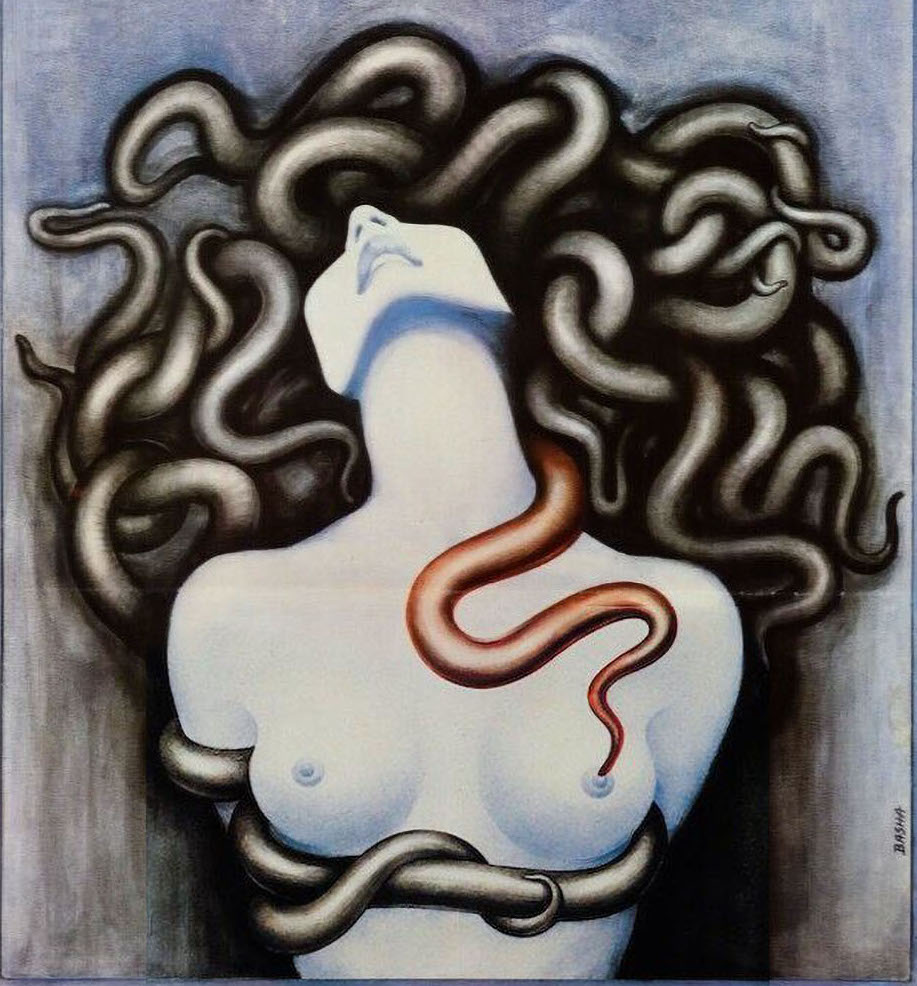
Image Credit: https://cultcollectiblesonline.com/product/possession-1981-13x27-italian-poster/