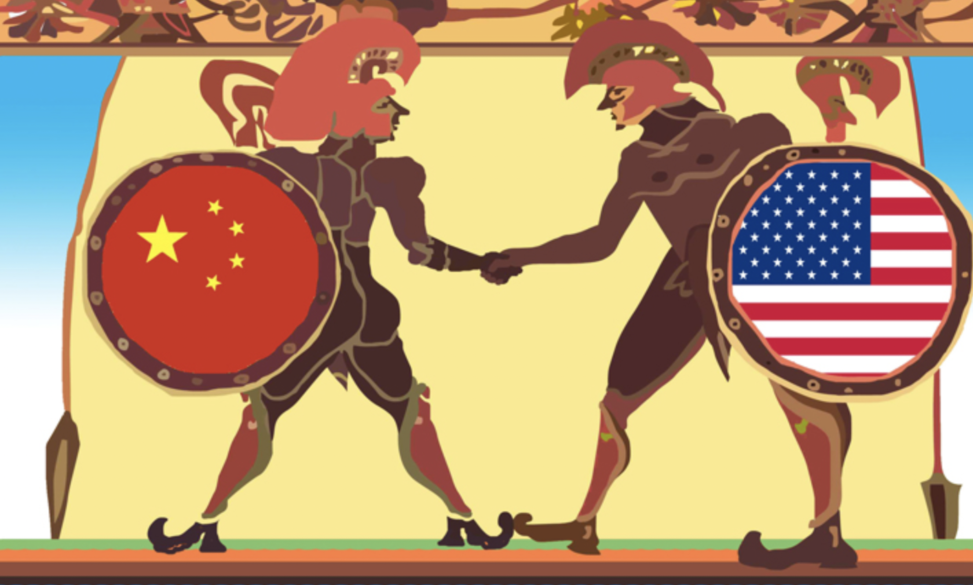
In the past three years, I feel as though my perception of the world has almost paradigmatically shifted. Although I recognize and am aware of this shift, I am having difficulty identifying its impetus. Could it have been something so destabilizing as the Coronavirus Pandemic? Could it be that the world is becoming increasingly chaotic? Or could I simply be experiencing the benefits of higher education, in which my newfound knowledge and understanding of the world reflects less about the world than it does my capacity to grasp the enduring implications of individual and collective action. If this were the case, my concerns and questions with respect to the world and its people would not differ significantly from those posed by people who existed before me. However, I remain convinced that my generation – particularly in America – is growing up in a very interesting and perhaps pivotal time, as our actions and the decisions our leaders make will undoubtedly affect the experiences of future generations. Given my educational background in Political Science and International Affairs, the most salient concern for current and future Americans, is, in my view, the United States’ relations with China – which includes not only dealing with its rise, but also reconciling the near inevitability of its superior status with two-centuries of American hegemony.
In order to help you understand the extent to which the next few years of American foreign policy may determine the lives of future Americans, think, for example, how different your life would be if the United States had not established the liberal international order immediately following World War II? Because such a task may be difficult for people who do not understand the exact impact of this period in history, it may be useful to provide some context: in 1944 the United States and other Western European nations held the Bretton Woods Conference in New Hampshire. In short, the conference supplied the institutional infrastructure that embodied the principles of an international order that supported continual American economic growth and ideological influence: (1) the International Monetary Fund (IMF) made the US dollar the new basis for currency exchange by equating it to gold; (2) the World Bank allowed the United States to dually support and control the recovery of Western European nations and the development of Latin American nations; and (3) the General Agreement on Tariffs and Trade (GATT), while purporting commitment to trade liberalization (i.e., free trade), exempted potential members and adherents of the liberal world order from following the strict principles of multilateralism and liberalism to encourage domestic economic growth and political legitimacy. In effect, the United States set the “rules of the game” and encouraged broad membership through financially incentivizing recovering European nations. Americans have thus benefited from a period of history in which the rules and institutions that respectively defined and enabled state interaction propagated American hegemony. That period may now be coming to an end.
Within International Relations, there are three main theories espousing alternative views of state behavior and the nature of the international system. Realism, which emerged as a legitimate and broadly understood theory in the mid-twentieth century, makes three main assumptions: first, the international system is anarchic in that there exists no governing power above the state. The nation-state is thus the principal actor within the international system and therefore its own security is guaranteed on a self-help basis. Second, nation-states behave rationally by making policy decisions that serve their own national interests. And third, states seek power over other (potentially friendly or enemy) states. At its inception, realism emphasized the effects of human nature on state behavior – specifically, man’s innate desire for power compels state leaders to act irrationally.
In contrast, Liberalism rejects power politics as the definitive characteristic of international relations and instead espoused three determinants of state behavior: (1) the mutual benefits of cooperation, (2) international institutions and trade, and (3) the spread of democracy as conducive to peace. Similarly, constructivism rejects the absolute influence of egoism and power politics and instead describes states as social creatures – that through repeated interaction and identity alignment, interests are developed and instituted both on domestic and international scales.
In the late twentieth century, realism, with the help of Kenneth Waltz’s Theory of International Politics, helped transform realism into structural realism, as his focus on the structure of the international order as anarchic effectively obscured the role of human nature in state behavior. At the same time, liberalism transformed into neoliberalism, and constructivism gained serious backing in the academic and policy-making arenas. The debate surrounding the relevance of these now-competing theories shapes American foreign policy in many ways. However, the legacy of realism, with its enduring impact on American foreign policy, as well as its underlying assumptions, has allowed neorealism to maintain its position as the dominant theory in IR over the past few decades. As a result, according to Joshua Shifrinson, many scholars and policymakers assume, on the basis of balance of power theory, that “rising states are apt to become increasingly predatory as their relative power grows” (175).
In this view, China, being the rising state, will (1) seek to supplant the United States, the declining state, as the new hegemon, and (2) orient the world around its own interests and ideals through the institution of a new world order. Even though Shifrinson claims that rising states [China] will likely adopt a “mixed strategy,” in which it will “seek gradual, sequential gains at the declining state’s [United States] expense while engaging in tactical cooperation if tensions begin to rise,” his conclusion still assumes international structure as the main determinant of state behavior (187). Much like the original theorists of realism, I think that human nature does, in fact, determine state behavior. But unlike those realists, I do not support the idea that power is the driving force behind state behavior; rather, I argue that fear drives leaders to behave in certain ways.
In True to Our Feelings: What Our Emotions Are Really Telling Us, Robert Solomon illustrates how fear “is an engagement with the world… It is about something that endangers us, something scary” (30). It is important to understand, though, that certain types of fear – or rather, certain threats – are not inherent to human nature. Rather, “we come to have more or less well-founded beliefs or appraisals about the safety and dangers” of certain activities and things. We form these beliefs “on the basis of evidence in our experience and from the testimony of others” (34). The United States’ view – and specifically the view held by its leaders – that China is inherently predatory and seeks to supplant the United States as the hegemonic world power reflects the idea that humans seek out potential threats as a means of survival: Chinese predation becomes incredibly hard to overlook when one enjoys a position of superiority.
Some might say that this fear is no longer rational given (1) what we now know about China, and (2) a more nuanced understanding of the international system. Solomon might have described this as an irrational fear – one that is “is sometimes immune to the relevant information about the world” (33). But just because a fear is irrational does not mean that it is problematic or misleading. In fact, “ignorant or misinformed fear,” says Solomon, “may be reasonable, if one had good reason to believe in the danger at the time” (37). The reasoning one uses to assess the level of perceived danger is, as Solomon says, formed “in our experience and from the testimony of others.”
For states, these personal experiences take the shape of deep historical legacies while the testimonies assume the form of international theory and similar types of commentary. For example, embedded within American culture are concepts of independence, freedom, and sovereignty – umbrella terms which perpetually serve as the basis for America’s national narrative and strategic culture. Serving as the foundation for these concepts is a historical memory in which a young American nation overcame the oppressive thrall of a harsh British empire, in which a developing state dealt with severe political, economic, and class cleavages, in which a model democracy faced an ideological enemy, and in which a world superpower attempted to cleanse the earth of perverse religious extremism. In short, the Revolutionary War, the Civil War, the Cold War, and the War on Terrorism entrenched a culture of American sovereignty to the extent that any (real or imagined) threat against that sovereignty is viewed as existential. In some cases, the fear was well-founded, while in others, it was not.
It thus makes sense to ask what exactly the United States is afraid of. Are its leaders afraid of a world in which China is the dominant economic and military power? Or are they afraid of a world in which the United States holds less influence and, perhaps more importantly, sovereignty, as it has come to understand the term over the past century? In many cases, asymmetric conflict arises when the declining power perceives the threat of the rising power and goes to great lengths to preserve its power. And in understanding this entrenched American historical legacy with Solomon’s conception of fear, we can view the United States’ [mis]perception to be a conditioned response to a somewhat recognizable fear. This is important for scholars, policymakers, and the general public because if we view the current tension and hostility between the United States and China as a result of American fear, and not Chinese predation, we may interrogate the true source of our fear, and in turn, perhaps avoid the “lower symptoms” taken to be the essence of a rather useful emotion.
Shared by: CGT