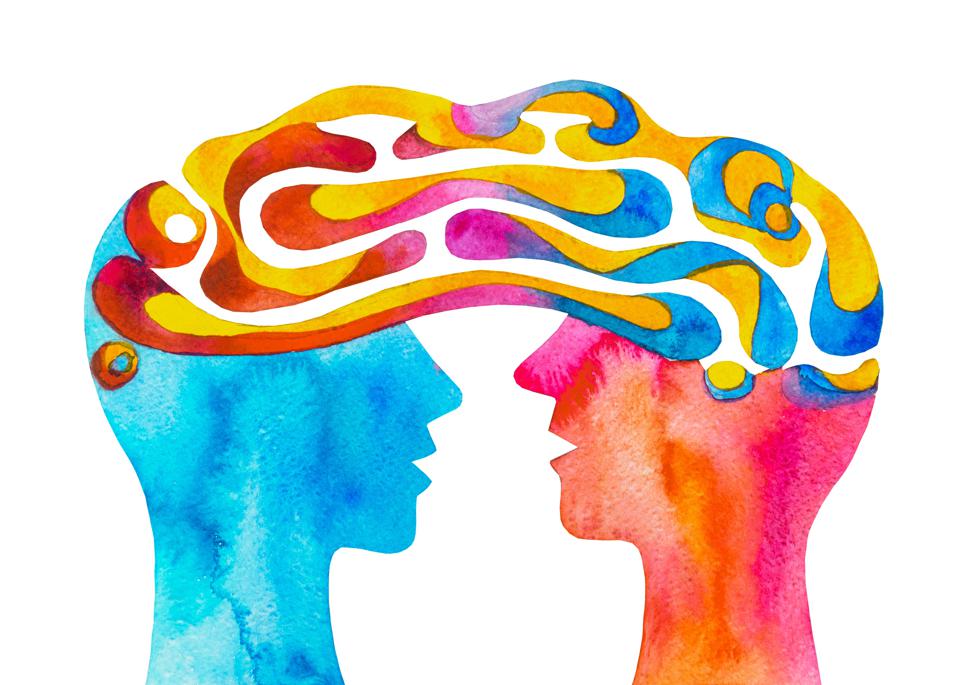
Empathy doesn’t have a long history behind it like all those emotions we have. This term seems to be coined by German psychologist Edward Titchner in the nineteenth century (Solomon, 65). Given this, it feels strange that we’ve had such an emotion for just two hundred years. Although there were a few philosophers using sympathy much like the combination of sympathy and empathy, the nature of empathy is very debatable after I reflected on Solomon’s ideas. After laying the foundational background information about emotions, let’s look into the perspective of Robert Solomon about empathy and other emotions as object-oriented and cognitive processes. After going through his view, I’ll try to disprove it based on his own theory by comparing empathy to his own emotional framework.
When reading Solomon’s chapter five on sympathy and empathy, a few questions arose inevitably (Solomon, 63). My most essential question on Solomon’s cognitivist view of empathy is rather big—is empathy an emotion? It might seem odd to raise such a question, but it isn’t pointless. Solomon’s introductions to and arguments of many kinds of emotions in Part I of his book have some fundamental similarities. There are several basic emotions, including anger, fear, sympathy, and several others, which constitute all our complex emotions. Also, emotions consist of “gut feelings” and some cognitive components. These features are quite compelling to me in his arguments about most emotions; however, the components of empathy may not be the same as other emotions, even with respect to Solomon’s own view. Hence, the puzzle is that empathy may not actually be an emotion when saying radically.
The reason why empathy becomes a discussion topic in the chapter on compassion (or sympathy) is that Adam Smith was one of those who ambiguously used this term to encompass both “‘feeling sorry for’ someone” and “understanding what another person feels,” which generally correspond to sympathy and empathy respectively (Solomon, 65). The status of sympathy being an emotion appears to be less controversial because the emotional responses are mainly centered around the relatively definite type of feeling, which is, simply put, feeling sorry. As Solomon clarified, “sympathy…is only a response to them [emotions of others] (Solomon, 67).” Sympathy, therefore, is very straightforward in its emotional responses toward another’s suffering. On the other hand, although conflated by some previous philosophers, empathy seems somehow different from sympathy. As Solomon himself identified, “one might even question whether it [empathy] is an emotion at all rather than a capacity to have any number of emotions depending on the emotions of others (Solomon, 67).” This issue certainly undermines Solomon’s argument because he didn’t directly respond to this potential objection that he clearly identified.
Since now we have a clear sense of my question, I can start unfolding the views of the two sides. Nonetheless, as I cannot find any explicit debate on whether empathy can be classified as an emotion, I have to picture empathy in Solomon’s sense. Firstly, sympathy can be “extremely primitive and unthinking” as in the case of “emotional contagion,” which means that people can innately pick up the feeling of others in an environment (Solomon, 67). For instance, one is likely to feel sad at a funeral even if s/he does not know anything about the person who just passed away, and I believe most people can easily relate to this feeling. As a cognitivist, Solomon certainly liked to extend this primitive feeling to connect it to human intelligence. “[W]ith some intellectual and imaginative effort, I can always empathize with other people,” said Solomon (67). By this he means, there could be intellectual reconstructions of others’ emotions in more complex instances of empathy. To mentally reconstruct those emotions, certain kinds of knowledge might be required (Solomon, 67). For example, animal rights activists once charged the keepers for keeping chickens in cages with wire bottoms just for those keepers’ convenience, but the reality is that chickens prefer wired bottoms to wooden or carpeted bottoms based on the following research. That shows intelligence might be heavily involved in reconstructing others’ feelings and, consequently, relating to their feelings. This also implies that if one cannot feel at least similarly to another, the feeling generated must not be empathy by definition. In addition, even with adequate knowledge to relate to another’s feelings, one might need some additional imagination to arouse the exact emotions (Solomon, 69). That is because the person may not have experienced similar situations or is not even accessible to them at all. Watching movies is a typical example of this because the plots and settings might be too distant for viewers.
This is a general description of empathy; however, whether itself can be classified as an emotion is another problem. In order to justify this, we must further dig into the nature of emotions in Solomon’s view to examine empathy individually. To reemphasize Solomon’s position on emotions, I take some key points from his introduction. He denies the position that emotions are involuntary reactions (Solomon, 8), and he deeply recognizes that emotions are “purposive” (Solomon, 9). That is to say, Solomon believes emotions are much further than mere biological responses or mental feelings but also contain intellectual activities directed toward an object. Seemingly, empathy from my description fits into this framework perfectly because it involves a reaction to a specific object, which includes someone’s situations and emotions, and it often requires cognition to be properly generated. However, compared to the less controversial emotions such as anger and fear, subtle differences could be identified, especially between the external objects and the emotions aroused within a process of empathy.
Let me give a simple real-world scenario to clarify this relationship. When I see my friend feeling glad about his good grade, I feel genuine happiness inside myself. This is a very typical situation in which Solomon would have no problem with recognizing my feeling of empathy, as an emotion. He has two options to defend his view. The simpler and more primitive possibility is that I’m feeling empathy because of emotional contagion. In this scenario, I could just be picking up my friend’s happiness. Honestly, this is a particularly valid process just like we can be laughing while hearing people laugh. Unfortunately, there’s a fundamental flaw in this theory regarding the object of me feeling happy for. Emotional contagion theorists have to admit that what essentially makes me happy is not my friend’s internal feeling of happiness but my friend’s happy expressions and his words of joy because I undoubtedly cannot access his mind. These are all components constituting the object of my happiness. The question of concern is, do these objects necessarily have any fundamental difference with a high grade when interpreted by my mind at this point? A high grade needs our life experience to be recognized as a source of happiness, and while someone’s smiling face may be an innate source of happiness (which is somehow debatable given constructivists’ arguments, see Barrett, Ch. 1), many other facial expressions, gestures, and poses also need our experience to be interpreted as expressions of happiness. If I’m right, there is no fundamental difference between my happiness due to emotional contagion and my friend’s happiness because of a good grade. By this, I mean emotional contagion is only a phenomenon in that people just feel certain kinds of emotions, and these emotions are the same as others’ because they express them. Hence, I do not think emotional contagion is a good example to explain empathy as a distinct emotion.
Solomon could further articulate his view of cognitively feeling empathy (which I think prefers). He would say my feeling of happiness is not the emotion as a whole but more of a biological process, and my perception and mental reconstruction of my friend’s high grade and happiness must be included as the intellectual and cognitive part of the whole process of empathy. On the other hand, I must again refute this elaboration because this structure of the whole process of me feeling the same as my friend is going to exceed the framework of emotion, even according to Solomon’s view. As a part of this process, I must still find an object that my happiness is toward, or it cannot be a complete emotion.
If it is so, the only object here must be the mentally reconstructed experience as a rough copy of my friend’s happiness plus the experience of receiving a good grade. This object must not be my friend’s good grade, or the whole process will simply be the same exact happiness as my friend’s without needing to be considered empathy at all. Therefore, by that empathy must be related to another’s emotions, there has to be a mental reconstruction of my friend’s happiness that the distinct biological component within my empathetic response of happiness to be toward. Then, there must be a cognitive process, no matter conscious or unconscious, that induces my mental reconstruction beforehand. As a result, what is eventually connected on the two ends are my happiness and my friend’s happiness. The important takeaway from this characterization of empathy is that although I’m feeling happy because of an interaction with my friend’s emotions and experience, the object that my happiness is directly toward is not my friend’s experience but my reconstruction of his. This is a fairly odd situation. The interaction part seems to fit into Solomon’s view, but my biological reaction is not directed toward the object that it is “interacting with”. Thus, I can’t agree that the whole process is strictly an emotion. My view is, what I’m feeling now is simply happiness, which is, definitely, different from my friend’s due to the different objects and processes. This entire framework of empathy, then, is another instance of me feeling the same emotion as my friend in which my capacities to reconstruct a mental image of my friend’s experience and to subsequently arouse the same emotion are involved and exhibited. What it means is, empathy shouldn’t be identified as an emotion itself. Instead, as Solomon already pointed out, it’s probably better to label it as a process that requires the primitive or intellectual capacity to mentally reconstruct someone else’s emotional experience and the arousal of the same emotions.
Maybe some people would argue that my view on empathy could be applied to all so-called emotions because they are all caused by the capacity to feel emotions if I haven’t clarified enough. What needs to be differentiated is that there’s an obvious intermediate process, conscious or unconscious, within the entire process of empathy, which isn’t present in sympathy and other emotions since they are directly responding to and interacting with external objects. In the end, I must confess that more details must be addressed about the debate on the cognitivist, constructivist, and other more foundational aspects of emotions in order to clarify this issue further, but here is what I can offer on contention regarding empathy.
Shared by: Nothingness
Image Credit: https://www.forbes.com/sites/nicolelipkin/2022/03/08/the-good-bad-and-ugly-of-empathy/?sh=ed3f0855c897