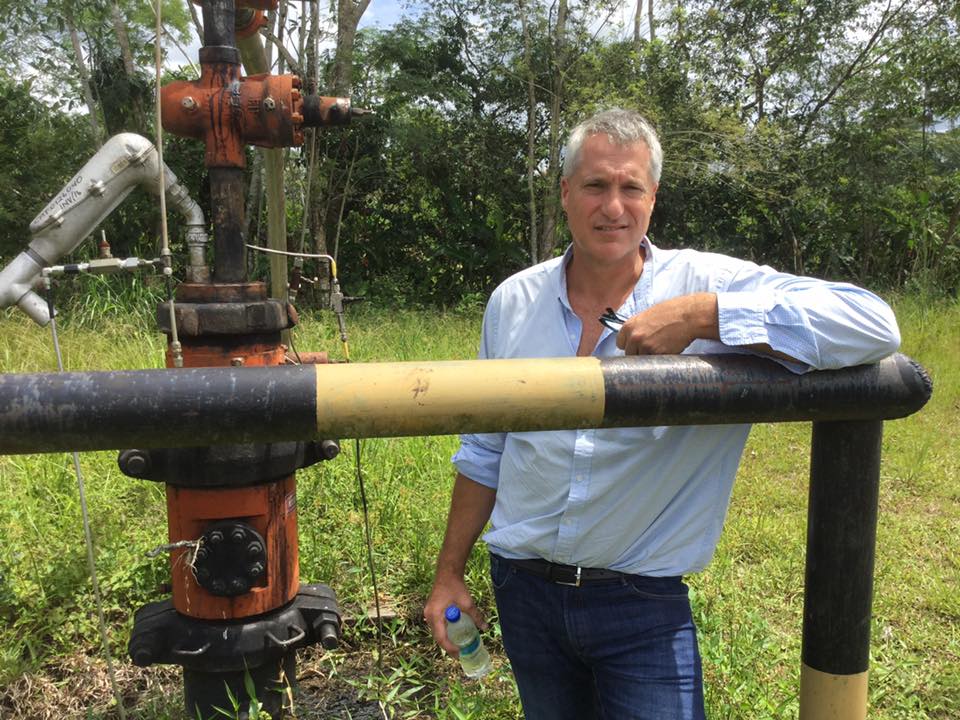
This April, Environmental and Human Rights Lawyer, Steven Donziger was released from a highly contested house arrest and prison sentence that lasted over 900 days. Following his successful multi-billion dollar, 2011 settlement against Chevron for their role in the contamination of land in Ecuador; Donziger was charged with contempt of court in 2019 after ‘refusing’ to turn over his personal electronics for examination in a case of “egregious fraud” that had been brought forth by Chevron to challenge the legitimacy of the settlement. Despite it being on the record since 2015 that the charges being brought against Donziger -that he had bribed an Ecuadorian Judge to rule against Chevron- were entirely a lie. Donziger was placed on house arrest in 2019, shortly before the Covid Pandemic started. He was kept on house arrest for the entirety of the pandemic, all while having his bank accounts frozen and his passport seized. Once being tried, he was charged to the fullest extent possible for misdemeanor contempt of court, and served 6 months in prison for his crime. The guilty charge resulted in Donziger being disbarred, or banned from practicing law, effectively eliminating one of the most prominent Environmental and Human Rights lawyers of the past 25 years (See this article from The Intercept).
Luckily, Donziger’s unjust trial has garnered heavy attention from activists. It is becoming increasingly obvious that this persecution only happened because of the sheer monetary power of $316 billion valued Chevron and the devastating legal and lobbying power they hold. There is ample evidence of Chevron consciously committing to the demonization and delegitimization of Donziger dating all the way back to 2009, and there is hope that Donziger will have legal recourse for re-barring and absolving his outstanding fines to Chevron. While there is hope that Donziger can return to climate activism and that his trials have inspired a watchful eye on the actions of corporations, his detention has shown us something very scary as well -that the hope of bringing these corporations to justice is, at least for the present moment, entirely unrealistic. Chevron has yet to pay out any money and all proof of its role in contaminating the Amazon has been thrown into the realm of abstraction. Any progress that had been made against Chevron has been entirely undone, and it will likely take many more years of litigation to return to where it had been in 2011.
This trial is just one of many happenings in recent years that has made it apparent that the outlook for the climate is quite grim. Chevron is certainly not the only corporation using its massive resources to clear its name of blame and responsibility. At the same time, our most recent data on the state of climate change is showing that we are running out of time. A recent New York Times article reports that we are currently blowing past thresholds of emissions to limit climate change to 1.5 degrees Celsius, which was the limit to avoid catastrophic climate impacts. Our newest projections put the estimated degree change at 2.1-2.9 degrees, and the current goals for emissions reductions promised by the UN would only contribute to about 1/6th of what is required to get back to a projection of 1.5. Even if Donziger’s case has inspired hope that (environmental) justice will prevail, there is no reason for us to believe it will be anytime soon. In fact, what we have seen is that if it does come, it will be after many long and arduous legal battles which -if they are like Donziger’s- will not only take decades but result in the loss of livelihood of many of the most committed and studied climate activists that we have.
With it seeming increasingly likely that we will never be able to meet the necessary goals in tight time frames that are required, it feels only rational to start giving up hope on saving the world. The already short time frame continues to get shorter, all the while, the powers at be are finding ways to slow the progress that we all want. Our systems of governance have not only failed the masses, but are being directly used against the masses at the expense of their future. The hope that things will get better, short of a complete societal overhaul, is all but dead.
However, this is not the full story. There is a burgeoning view amongst environmentally focused academics such as Sarah Jaquette Ray that losing hope, or at least our current conception of it, may be exactly what we need to begin moving forward in a battle as daunting as the battle for our climate. For Ray, “[h]ope by itself is beside the point” when talking about climate change, because we are already living in a climate-changed world (Ray 122). The truth of the matter is that like Donziger’s trial has shown, justice will come far too late to save the world we know today. Almost all of the evidence, scientific or anecdotal, shows that this is a battle we will not win; what instead matters is learning to accept that the future will be full of losses.
The approach to hope that Ray asserts many climate activists, journalists, and scientists are currently operating on, as defined by Derek Jenson, “is a longing for a future condition over which you have no agency; it means you are essentially powerless” (122). When we are told about the conditions surrounding climate change, such as the melting of the arctic, greenhouse gas emissions, or global oil usage, this is absolutely the case. No person could solve, or even make a significant contribution to the problem of climate change just by virtue of behaving in a climate-friendly way. We are all left hoping for the people at the forefront of the movement to finally make things right, whether it be through invention, investment, or legal battle. But, the chance that Donziger and other climate activists will even be able to do something is shrinking. Thus without evidence that large-scale change is possible, we have no reason to hope at all. Ray calls this style of hope utilitarian hope because our reasons for having it depend on whether there is reason to believe that things will get better. When the odds are incredibly against our favor, the utility of hope begins to fade, and it can become harder to act upon the things we want to see change in the world.
Alternatively, Ray argues that we need a kind of hope that will give us “new resources to deal with the forces that affect their lives” and inspire us “to yearn for a new way of being”. She calls this “critical hope” because it is based on the judgment that moving forward hopefully is necessary, regardless of the evidence for doing so (122-3). This style of hope, Ray argues, entails the seemingly contradictory ideas of 1.) an acceptance “that the world is dying” and 2.) the desire for a better future (123-5). However, this is not as contradictory as one may think, it is actually the only way to maintain any efficacy at all in difficult battles such as this. We need a hope that drives change forward and inspires people to take action; not a hope that relies on the action already taking place.
If we are ever going to achieve meaningful change in the battle for our climate, it is going to come through a long-term, person-level commitment to radical changes in our living styles and patterns. Thus, for Ray, the fostering of that long-term commitment is the goal of having any hope at all for our climate. This is possible, she argues, if we are able to find a way to anticipate pleasure through our actions. It certainly is not pleasurable to focus on the sad state of our world today, and it likely never will be pleasurable to look at again. We must accept that fact, and find reasons for pleasure outside of the idea that things will be fixed. By doing so, we open ourselves up to new possibilities for action and a new motivation to act upon what we find meaningful. As Charles Eisenstein writes “it’s as if giving up on saving the world opens us up to doing the things that will save the world” (125).
Sources:
https://www.nytimes.com/2022/10/26/climate/un-climate-pledges-warming.html
Shared by: Jordan B